Top 10 Benefits of Working With an Ecommerce Digital Marketing Agency
By Richa Sharma04-Jun-2026
Table of Contents
Home » Blog » Top 10 Benefits of Working With an Ecommerce Digital Marketing Agency
Online retail has never been more competitive. Thousands of stores launch every month, ad costs keep rising, and customers have endless choices. Brands that grow consistently do one thing differently; they invest in expert marketing from people who have done it before, with real budgets and real pressure to deliver results. Working with an ecommerce digital marketing agency gives brands access to specialists across SEO, paid ads, content, and social media who understand product pages, cart abandonment, seasonal campaign timing, and customer lifetime value.
In-house teams may lack the capacity or resources to handle everything at once, while freelancers seldom provide a cohesive plan. An agency combines depth and coordination under one roof. This article from Redefining Web discusses the top ten advantages that organizations get when they work with the proper agency, as well as price, SEO, social media, and content strategy.
Boost Your Ecommerce Sales With Expert Marketing Today
Discover how a professional ecommerce digital marketing agency can increase traffic, conversions, and revenue quickly
Boost Your Ecommerce Sales With Expert Marketing Today
Discover how a professional agency can increase traffic, conversions, and revenue quickly
Most ecommerce brands hit a growth ceiling at some point. Traffic plateaus. Conversion rates stall. Ad spend climbs without a matching return.
The common thread across these problems is a lack of a specialised strategy. Generalist approaches produce average results. Full stop.
Ecommerce requires specific knowledge of buyer psychology, platform algorithms, product feed optimisation, and technical site performance. Here is what the right agency partnership actually delivers.
What is an Ecommerce Digital Marketing Agency
An ecommerce digital marketing agency is a specialist firm that handles online growth for product-based businesses. Core services typically include:
Search engine optimisation
Pay-per-click advertising
Social media management
Email marketing
Conversion rate optimisation
Content creation and strategy
The key difference from an in-house team is specialisation built through repetition. Agency staff work across multiple clients and industries simultaneously. They spot patterns faster, test strategies at greater scale, and apply what works across campaigns without the trial-and-error tax an internal team would pay. That experience is difficult and expensive to replicate internally.
Common Mistakes Ecommerce Brands Make
Even brands with solid products and reasonable budgets repeat the same errors when they manage marketing without specialist support.
The most damaging mistakes:
Ignoring technical SEO until rankings collapse
Running paid campaigns without conversion tracking in place
Publishing content with no keyword or buyer intent strategy
Treating social media as an afterthought rather than a sales channel
Failing to use analytics to guide budget allocation
Overlooking mobile optimisation despite the majority of traffic being mobile
These mistakes compound over time. A brand that ignores SEO for two years faces a much longer recovery timeline than one that addresses it early. Working with a specialist team prevents most of these errors before they become expensive problems.
Common Problems Ecommerce Businesses Face Today
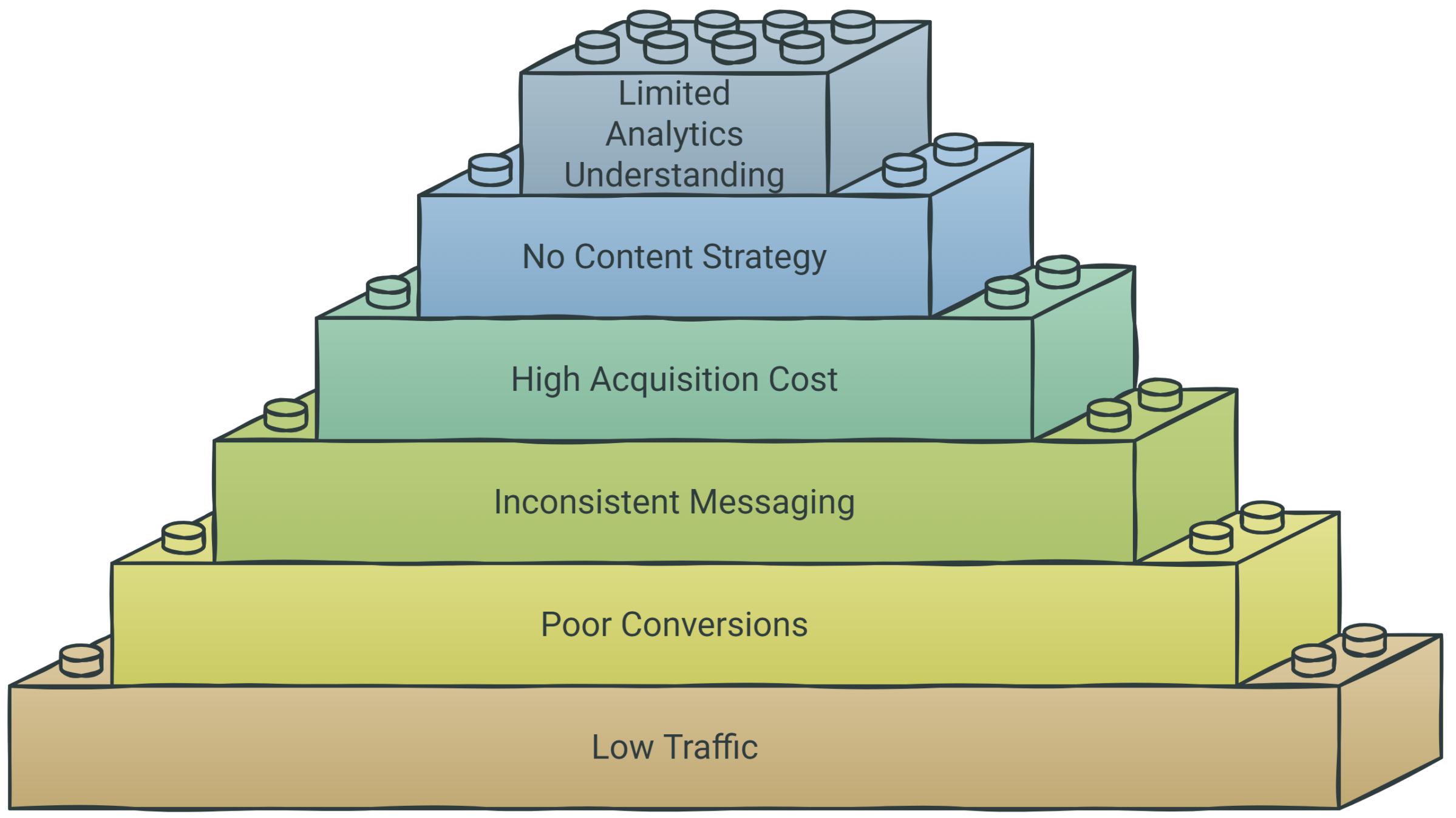
Before exploring the benefits, it helps to understand what agencies actually solve. Most ecommerce brands struggle with at least one of these:
Low organic traffic and heavy dependence on paid ads
High cost per acquisition with weak return on ad spend
No clear content strategy or editorial calendar
Limited understanding of analytics and what the data actually means
These are not small problems. Left unaddressed, they drain budgets and slow growth considerably. The good news is that every single one of them is solvable with the right expertise.
Top 10 Benefits of an Ecommerce Digital Marketing Agency
Benefit 1: Increased Organic Traffic Through SEO Organic search remains one of the highest-converting traffic sources for ecommerce. Agencies build structured SEO programmes that target commercial keywords, fix technical issues, and earn backlinks over time. The traffic compounds. The cost per visit drops year after year.
Benefit 2: Higher Conversion Rates Using CRO Strategies Getting traffic is one thing. Getting people to buy is another. Agencies test pages and fix what stops visitors from converting.
Benefit 3: Scalable Paid Advertising Campaigns Agencies stop money going to ads that do not work and put more behind the ones that do.
Benefit 4: Stronger Brand Awareness Agencies keep your brand looking and sounding the same everywhere, so people start to recognise and trust you.
Benefit 5: Data-Driven Decision Making Agencies track everything and move budget towards what actually brings results.
Benefit 6: Multi-Channel Marketing Integration SEO, social, email, and paid ads work much better together. Agencies make sure they do.
Benefit 7: Better Customer Targeting Showing ads to the wrong people wastes money. Agencies use purchase history, behaviour, and demographics to reach people who are genuinely likely to buy.
Benefit 8: Improved ROI Smarter targeting, better creative, and tighter budget control mean your money works harder than it ever would with a self-managed campaign.
Benefit 9: Professional Campaign Management Agencies take care of the strategy, the execution, and the reporting. You get proper marketing oversight without the cost and hassle of building an internal team.
Benefit 10: Faster Business Growth Specialists who do this every day move faster than a stretched internal team ever could. Things get tested quicker, results come sooner, and growth picks up pace.
Role of Organic SEO Services in Ecommerce Growth
Paid traffic stops the moment budgets pause. Organic traffic compounds over time. That distinction makes organic SEO servicesone of the most valuable long-term investments an ecommerce brand can make.
A reputable organic SEO agency builds visibility across product categories, blog content, and technical site performance simultaneously. Keyword research identifies what customers search for at each stage of the buying process. Technical audits fix crawl issues, page speed problems, and structured data gaps that hold rankings back for months or even years.
The results take time to materialise but they last. Brands that invest in organic search early build a traffic asset that reduces their dependence on paid channels significantly, year after year.
Key areas an organic SEO agency covers:
Keyword strategy and mapping across the full product catalogue
On-page optimisation for product and category pages
Technical SEO audits and prioritised fixes
Link acquisition and digital PR campaigns
Content creation aligned to search intent at every funnel stage
How an Organic SEO Consultant Improves Rankings
Sometimes a brand needs focused expertise rather than a full agency engagement. An organic SEO consultantworks directly with your internal team to spot ranking opportunities and fix what is quietly holding your site back.
Most consultants start with a proper audit. They look at your site structure, page performance, backlink profile, and what competitors are doing better than you. From there, they put together a clear action plan your team can actually follow without second-guessing every step.
The real benefit is speed and directness. There is no agency layer in between. If your developers and content team are already in place, things move quickly. This setup works especially well for brands that have the internal resource but just need someone to point them in the right direction.
Social Media Marketing Packages for Ecommerce Brands
Social media drives discovery and repeat purchase for ecommerce brands. The platforms have changed how people find products entirely. Brands that show up consistently on Instagram, Facebook, and TikTok build audiences that convert at far higher rates than cold paid traffic.
Social media marketing packages give brands a structured approach to platform management. A solid package covers content creation, scheduling, community management, paid social, and performance reporting in one coordinated programme.
Package Component
What It Covers
Content Creation
Graphics, video, and copy for each platform
Scheduling
Consistent publishing calendar
Paid Social
Targeted ad campaigns
Community Management
Replies, DMs, engagement
Analytics Reporting
Monthly performance review
Each platform works differently. Instagram rewards strong visuals and short-form video. Facebook performs well for retargeting and direct response. TikTok favours raw, fast content that catches trends early. A good package is built around what works on each platform, not the same post copied and pasted everywhere.
Role of a Social Media Marketing Manager in Ecommerce Growth
A social media marketing manageris the person behind a social account that actually performs. They handle content calendars, paid campaign setup, influencer outreach, and audience analysis all at once.
They keep a close eye on what content lands and what does not, adjust creative when something stops working, and make sure the brand stays relevant as platform algorithms and audience habits shift over time.
For ecommerce brands, the social media marketing manager also bridges organic and paid activity. They use organic performance data to inform ad creative and paid results to shape organic content priorities. That feedback loop produces consistently better results than managing the two streams without any coordination between them.
Content Marketing for Ecommerce Success
Content builds trust before a customer ever reaches a product page. Blog posts answer questions. Buying guides reduce friction. Comparison content helps buyers decide with confidence. Done well, content marketing brings in organic traffic and moves customers through the purchase funnel at the same time.
The best content marketing agencies know that ecommerce content has to do two things at once. It needs to answer what the reader is searching for and nudge them towards a purchase without feeling like a sales pitch.
A good content marketing specialist brings writing quality and SEO knowledge together in every piece. They research keywords, structure content so people actually read it, and write in a way that shows up in search and converts once someone lands on the page.
For software businesses, a saas content marketing agency takes the same approach but focuses on comparison pages, product-led articles, and integration guides. The goal is to reach buyers who are already deep in research mode and just need the right content to push them towards a decision.
Scale Your Brand With Expert Content and SEO Strategy
Get high-performing content strategies designed to attract, engage, and convert customers
Brands that combine strong content with technical SEO build growth engines that compound over time. Each new piece of content creates a new entry point for organic traffic. Each optimisation compounds the impact of everything published before it.
The brands that grow fastest treat content and SEO as a single, coordinated programme. Not separate activities managed by separate people with separate goals.
Healthcare Social Media Marketing as a Niche Strategy
Healthcare social media marketingoperates under different rules from standard ecommerce. Compliance rules and privacy concerns shape every decision in healthcare marketing. Getting it wrong is not an option.
Ecommerce brands can pick up a lot from this. Healthcare marketers earn trust by being consistent, honest, and straight to the point. They skip the pushy sales messaging because their audience needs to feel comfortable before they do anything.
Brands selling health, wellness, or personal care products deal with the same thing. The lesson from healthcare social media marketing is simple. Lead with helpful information, not promotions, and earn trust gradually rather than pushing for a quick click that goes nowhere.
Understanding Digital Marketing Agency Pricing Models
Digital marketing agency pricing is not the same across the board. What you pay depends on what you need and how involved you want the agency to be. Getting your head around the different models saves you from being confused when two agencies quote very differently for what seems like the same work.
Pricing Model
How It Works
Best For
Monthly Retainer
Fixed fee for ongoing services
Long-term growth programmes
Project-Based
One-off fee for defined deliverables
Specific campaigns or audits
Performance-Based
Fee tied to results achieved
Brands with clear KPIs
Hourly Rate
Charged per hour of work
Consultancy and advisory work
Monthly retainers suit brands that need ongoing SEO, social, and content support. Project-based digital marketing agency pricing works well for a specific campaign launch or one-time audit. Performance-based models align agency incentives with brand goals but require clear measurement frameworks from the outset.
Cheaper is rarely better in marketing. The right agency pays for itself through improved results within months.
Comparison Table: Agency vs In-House vs Freelancer
Factor
Ecommerce Agency
In-House Team
Freelancer
Expertise
Full-stack specialists
Limited skill range
Single skill focus
Cost Efficiency
Scalable pricing
High salary cost
Low but inconsistent
Performance
Data-driven strategy
Moderate execution
Variable quality
Tools and Tech
Advanced tools access
Limited tools
Basic tools
Scalability
High scalability
Limited scaling
Not scalable
Expert Tips for Choosing the Right Agency
Not all agencies deliver equally. Here is what to look at before you commit:
Check case studies from brands in similar product categories
Ask how they approach SEO and paid ads, not just what results they have got
Make sure they use data and regular reporting to guide their decisions
Find out how they communicate, how often, and who your actual point of contact will be
Know exactly what the pricing covers before you sign anything
If an agency cannot clearly explain what they do or show real results from past work, walk away. The best partnerships are built on straight talking from both sides right from the start.
Expert insights from
Sandeep K Digital Marketing Analyst
“A strong ecommerce strategy is built on consistent optimization, not one-time campaigns.”
The landscape shifts constantly. Brands and agencies that stay ahead of these trends maintain a real competitive edge:
AI-driven marketing automation reduces manual workload and improves personalisation at scale across email, ads, and on-site experiences
Voice search optimisation captures a growing volume of spoken queries from mobile and smart device users
Short-form video dominates discovery across TikTok, Instagram Reels, and YouTube Shorts for product categories of all types
Influencer-driven ecommerce connects brands with highly engaged niche audiences that trust recommendations far more than traditional ads
First-party data strategies become essential for brands as third-party cookie tracking continues to phase out across major browsers
Agencies that invest in these areas consistently deliver better results than those still relying on approaches that worked five years ago.
Trust Building and ROI Value of Ecommerce Marketing
Trust drives ecommerce sales more than any single tactic. Customers do not buy from brands they do not recognise or believe in. Building that trust takes consistent effort across every channel.
An ecommerce digital marketing agency builds trust through content that educates, social proof that validates, and a brand voice that stays consistent across every platform. Transparent reporting matters here too. You should always know what is working, what is not, and where your money goes.
Long-term ROI from SEO and content compounds in ways that paid advertising cannot match. A well-optimised page published today can generate traffic and revenue for years. A paid ad delivers results only while the budget runs.
Brands like those working withRedefining Web demonstrate how combining organic SEO, content strategy, and social media under one focused team produces compounding growth. Their approach shows that consistent, data-backed execution beats short-term campaign thinking every time.
Start Scaling Your Ecommerce Business Today
Partner with experts to boost traffic, sales, and long-term brand success
Growth does not happen by chance. It comes from consistent, expert effort across every marketing channel, managed by people who understand what they are doing and why.
Redefining Web has contributed meaningfully to how ecommerce brands approach integrated digital strategy, helping product businesses move beyond siloed campaigns and towards coordinated growth programmes that deliver measurable, long-term results worth building on.
Partnering with the right ecommerce digital marketing agencyis one of the highest-leverage decisions a growing brand can make. The expertise, tools, and strategic focus an agency brings are difficult to replicate internally, and the returns compound significantly over time for brands that commit to the partnership properly.
Start Scaling Your Ecommerce Business Today
Partner with experts to boost traffic, sales, and long-term brand success
Hi, I’m Richa Sharma, a digital marketing professional with 8+ years of experience in SEO and online marketing. I currently work as an SEO Manager at Redefining Web, where I help businesses improve their Google rankings, website traffic, and online visibility. I have experience in SEO, social media marketing, keyword research, Google Analytics, and content optimization. I enjoy creating smart marketing strategies that help brands grow online and reach more customers. I am passionate about learning new digital trends, working with teams, and helping businesses achieve better online results.
Know your website’s SEO Score.
Get a customized SEO Audit report & improve your website statistics.





 Chat on WhatsApp