
If you’ve ever wondered, “How do brands keep showing me ads wherever I go online?” the answer is usually Google Display Ads. These visual ads appear as images, banners, and videos across websites, apps, and even YouTube, helping businesses boost visibility, attract new customers, and improve conversions.
In fact, many companies today work with a PPC Expert to get the most out of Display campaigns because the platform has become more powerful and data-driven than ever.
What makes this even more powerful is the reach:
The Google Display Network (GDN) now reaches over 92% of internet users worldwide in 2025, covering billions of devices across mobile, desktop, and tablets.
This means your brand can show up almost anywhere your audience spends time, not just when they’re searching. So whether your goal is awareness, traffic, or stronger conversions, Display Ads can expand your reach far beyond search results.
What Makes Google Display Ads Different?
One thing that makes Google Display Ads stand out is how visually engaging they are. Instead of plain text, you can use colorful graphics, animated banners, short videos, GIFs, and dynamic product ads that pull real-time product data.
These formats naturally draw attention and help people remember your brand. Many advertisers rely on a Google Ads Expert because Display now supports high-quality HTML5 creatives, responsive formats, and AI-generated ad combinations.
Display Ads also appear on millions of websites, apps, and YouTube channels. As of 2025, Google reports that Display inventory covers more than 45 million sites and apps, which means your message can follow your audience across news websites, shopping platforms, gaming apps, and content hubs.
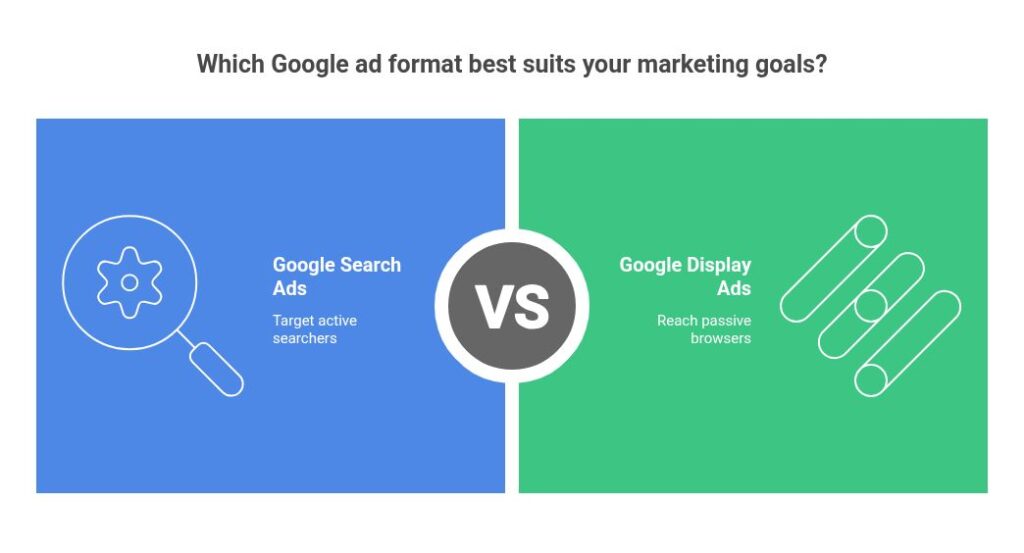
Here’s an easy way to understand the difference:
- Google Search Ads show up when someone is actively searching for what they need.
- Google Display Ads appear while someone is browsing, scrolling, reading, or watching content, even if they’re not searching yet.
This makes Display Ads perfect for brand awareness and early-stage conversions, especially when used strategically.
Getting Your Brand in Front of More People
Did you know that the GDN covers over 35 million websites and apps globally, and this number continues to increase every year as more app publishers join the network? This gives advertisers a massive opportunity to reach larger audiences at lower costs.
Display Ads help you connect with people who may not be searching for your product yet, but might show interest when they see it. It’s ideal for:
- New audiences
- Broad awareness campaigns
- Cold traffic nurturing
For example:
A fitness brand launches a Display campaign showing visuals of protein powders and activewear. A user scrolling through a recipe website sees the ad and remembers the brand later when shopping for fitness products. That simple impression plants a seed that often turns into a sale.
Display Ads work quietly but effectively in the background, introducing your business to people before they even realize they’re ready to buy.
To maximize this reach, many brands team up with an SEO agency so their Display strategy supports their overall digital marketing plan.
Let Google Find the Right Audience
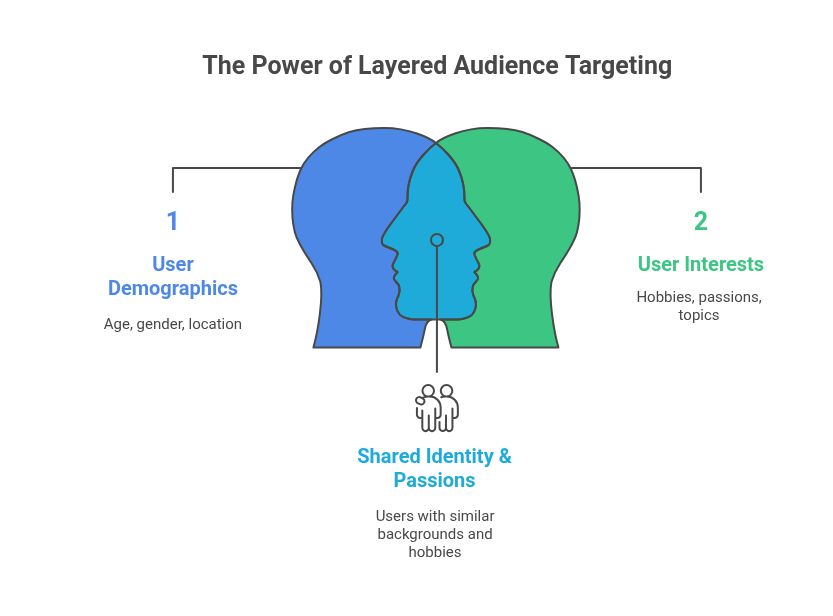
One of the biggest strengths of Google Display Ads is advanced targeting. You can reach users based on:
- Demographics
- Interests
- Online behavior
- Purchase intent
- Past website activity
- Search history signals
With Custom Intent and Custom Segment audiences, Google uses real search behavior to find people who recently looked for products similar to yours. This makes Display much more accurate than traditional banner advertising.
And then there’s remarketing, which remains one of the highest-converting Display features. If someone visited your website but didn’t buy, Display Ads can remind them with personalized visuals. In 2025, Google reported that remarketing campaigns generate up to 76% higher conversion rates compared to non-remarketing Display campaigns.
AI also plays a huge role now. Google’s AI-powered targeting and bidding automatically find users most likely to convert. On average, advertisers see 28-45% improved conversions when using AI audience expansion and smart bidding strategies.
This level of targeting often benefits from expert guidance, which is why many businesses rely on an experienced SEO Expert to align SEO insights with ad targeting.
Cost Benefits: More Reach at a Lower Price
Display Ads continue to be a budget-friendly way to scale online marketing.
- Display Ads usually cost 60-70% less per click than Search Ads.
- In 2025, the average Display CPC in India is ₹6-₹18, while Search CPC can range from ₹25-₹95, depending on the industry.
- CPM (Cost Per Thousand Impressions) for Display typically ranges from ₹20-₹80, making it ideal for branding campaigns.
Advertisers can choose between:
- CPC (Cost-Per-Click) is great for driving traffic.
- CPM (Cost-Per-Thousand Impressions) is perfect for increasing visibility.
Because of this cost advantage, Display gives small and medium businesses a chance to grow even with limited budgets.
Real Performance Impact for Advertisers
Display advertising doesn’t just expand reach, it influences real results.
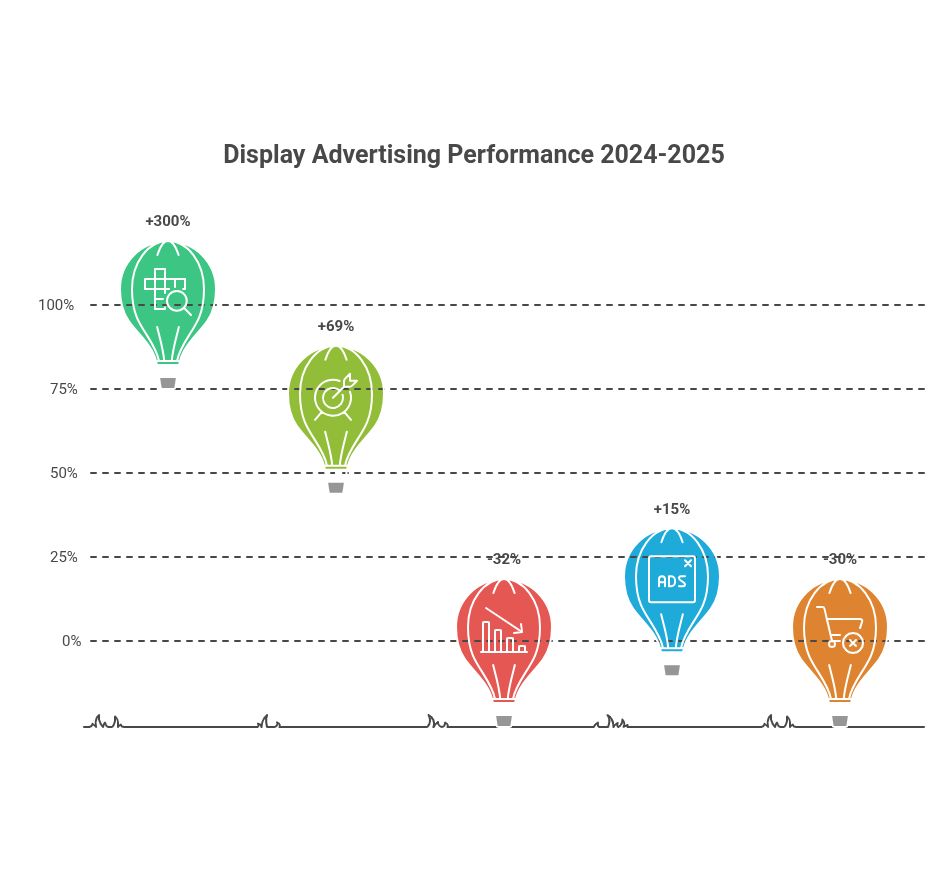
Here are the updated 2024-2025 stats that matter:
- Brands get up to 3× higher overall visibility when combining Search + Display.
- Display remarketing improves conversions by 60–78%, depending on industry.
- Google’s AI-powered bidding can reduce CPA (Cost Per Acquisition) by up to 32%.
- Responsive Display Ads now deliver 10–20% more conversions than static banners.
For example, an eCommerce store struggling with abandoned carts runs a Display remarketing campaign. The ads show the exact products users viewed earlier. Within weeks, cart abandonment drops 30%, and revenue climbs significantly.
Display Ads may not convert on the first impression, but they build multiple touchpoints, and today’s buyers need 5–12 touchpoints before making a purchase. Display creates those touchpoints faster and at a lower cost.
Comparison Table: Google Display Ads vs Google Search Ads
| Feature | Google Display Ads | Google Search Ads |
| Audience Type | Passive (browsing) | Active (searching) |
| Average CPC | ₹5-₹15 | ₹20-₹80 |
| Best For | Awareness, remarketing | High-intent leads |
| Ad Formats | Images, banners, videos | Text-only |
| Reach | 90%+ of global users | Limited to search results |
| Conversion Rate | 0.5%-1% | 2%-5% |
Both are effective, but Display wins when it comes to reach and cost efficiency.
Best Practices for Better Google Display Ad Results
To achieve the best outcomes with Display Ads:
- Use multiple ad sizes for maximum coverage.
- Use Responsive Display Ads to let Google’s AI optimize layouts automatically.
- Always set up remarketing lists to bring back warm audiences.
- Keep visuals clean, modern, and easy to understand.
- Test multiple audiences and creatives to find what works.
- Track results with Google Analytics 4 and Google Ads reports.
Summing Up
Google Display Ads offer massive reach, strong targeting, and lower costs, making them a smart way for any business to grow online. They help you attract new audiences while bringing back past visitors with remarketing.
When you combine Display with Search, overall performance can increase by 20–30% or more. If you want affordable scale, better visibility, and smarter targeting, Google Display Ads are absolutely worth investing in.


Know your website’s SEO Score.
Get a customized SEO Audit report & improve your website statistics.