How Gemini SEO Impacts Google’s AI Search Results in 2026
By Richa Sharma18-Jun-2026
Table of Contents
Home » Blog » How Gemini SEO Impacts Google’s AI Search Results in 2026
Search broke. Not slowly, not gradually. It broke all at once.
Google no longer hands users a list of links and asks them to figure it out. It reads the query, pulls from multiple sources, and delivers one answer, right there on the results page. No clicking required. No comparison shopping across tabs.
For businesses that built their visibility on organic rankings, this is a direct threat and a direct opportunity, depending on how fast they move.
Gemini SEO is the practice of optimising content for Google’s AI-powered search environment. It is not a rebrand of traditional SEO with a new coat of paint. It is a fundamentally different approach, one that centres on intent, authority, and genuine usefulness rather than keyword frequency and backlink volume.
This article breaks down exactly how Google’s AI search works, what changed, and what businesses need to do to stay visible in 2026.
Not sure how your website performs in AI search?
Redefining Web offers a free SEO audit to show exactly where you stand.
Google’s AI search model does not match keywords to pages. It reads a query, interprets the intent behind it, and constructs an answer from sources it considers trustworthy and relevant.
The system weighs four things above everything else:
Search intent: What the user actually wants, not just what they typed
Content quality: Depth, accuracy, and whether the page solves a real problem
Source authority: How much Google trusts the domain overall
Contextual relevance: Whether the content fits the broader topic, not just the specific query
Appearing in an AI-generated answer now carries as much value as a first-page ranking. In some cases, more. The AI response sits above all organic results, above paid ads, and above featured snippets. Businesses that earn that placement gain brand exposure without the user ever clicking a link.
Why Google AI Search Is Transforming Traditional SEO
Five years ago, ranking well meant getting clicks. Users landed on a results page, scanned the list, clicked a link, disliked it, came back, and clicked another. That behaviour pattern drove enormous traffic volumes across hundreds of competing pages.
That pattern is eroding fast.
Google’s AI now satisfies a large portion of queries without any clicks at all. A user asks a question. Google answers it. The user moves on. The ten blue links below that answer receive far fewer visits than they once did.
Two outcomes follow from this:
Click-through rates fall for queries where the AI answer is complete and accurate
Traffic quality rises for queries where users still click through, because those users want more than a quick answer
Rankings now reflect content quality far more than keyword presence. A page stuffed with the target phrase but thin on substance gets ignored. A page that actually solves the problem earns a citation. The gap between those two outcomes is widening every month.
Why Gemini SEO Matters for Businesses in 2026
Brand exposure in AI results works differently from traditional rankings. When Google cites a business as a source, that citation appears at the top of the page, before users even see the organic list. The business name appears in a context of authority. Google chose it. That signal is not subtle.
The concrete benefits stack up:
More qualified traffic from users with genuine, specific intent
Brand recognition from AI citations, even when users do not click through
Higher trust signals, since Google’s selection implies credibility
Better conversion rates from visitors who already trust the source before they arrive
Businesses that delay this adaptation hand the advantage to competitors who move sooner. Authority in AI search compounds over time. Every piece of quality content adds to a cumulative trust score. Late movers face a steeper climb on every front.
How Businesses Can Benefit From AI Search Visibility
AI search visibility creates opportunities that traditional SEO never produced. A business can appear in the featured AI answer without holding the number one organic position, purely by producing content that Google’s model finds most helpful.
Benefit
Impact
Brand exposure at top of SERP
Builds awareness even without a click
Intent-matched traffic
Higher engagement, lower bounce rates
AI citations
Functions as a trust signal before the visit
Competitive positioning
Advantage over brands still using outdated methods
Businesses in competitive niches benefit most. When a user asks a comparison question or a problem-solving query, appearing in the AI answer positions the brand as the trusted source before the user has even seen the website.
How Google AI Search Works Behind the Scenes
Google’s AI search model draws on machine learning and semantic understanding. It does not scan for matching text. It understands relationships between concepts, entities, and topics across an entire knowledge base.
The system:
Pulls from multiple trusted sources and synthesises a single answer
Prioritises content that directly and clearly answers the query
Factors in user engagement as a quality indicator
Structured data, clean formatting, and logical content architecture all help the AI model read pages correctly. Technical performance matters alongside content. A slow, poorly structured website signals lower quality regardless of how well the writing reads.
Core Ranking Factors for Gemini SEO
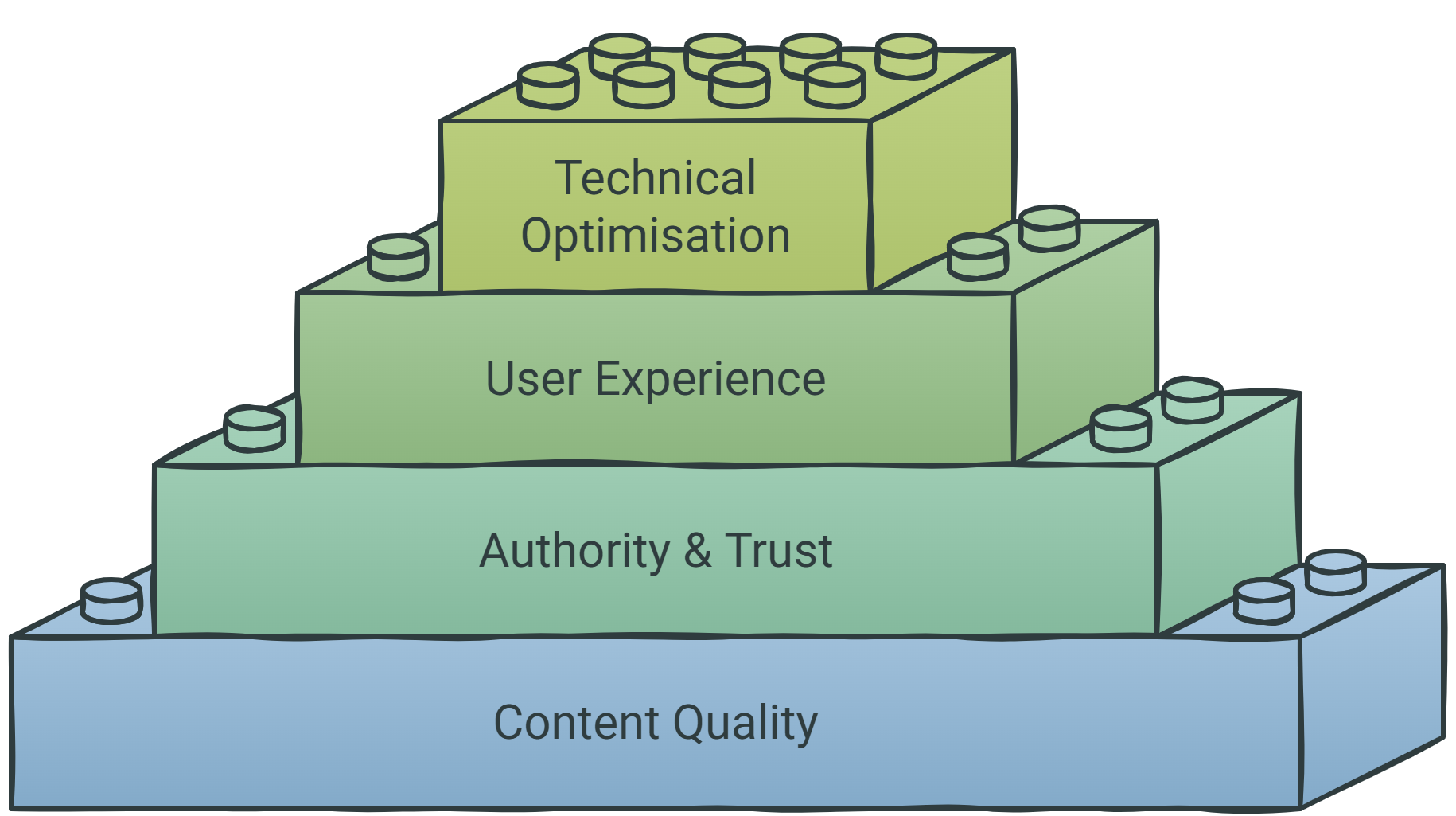
Google’s AI model does not rank pages on a single signal. It weighs a combination of factors, and understanding each one helps businesses prioritise where to focus their efforts.
Helpful and relevant content sits at the top of the list. A page that directly answers what the user asked, without padding or filler, earns far more consideration than a long page that buries the answer halfway down.
Website authority and trust signals matter significantly. Google evaluates the domain as a whole, not just the individual page. A site with a strong backlink profile, consistent publishing history, and clear expertise across its niche carries more weight in AI-generated answers.
User experience and engagement metrics feed directly into quality assessment. Pages with high bounce rates, low time on site, and poor mobile performance signal to Google that the content did not satisfy the visitor. AI search penalises that signal.
Structured data and technical optimisation help Google’s model read and categorise content correctly. Schema markup tells the AI what type of content a page contains, who authored it, and what question it answers. Without it, even strong content can get misread or overlooked entirely.
These four factors work together. Strong content on a weak domain underperforms. A technically perfect site with thin content earns nothing. Businesses that address all four consistently build the strongest foundation for AI search visibility.
Expert insights from
Sandeep K. SEO executive
“Google’s AI search does not reward businesses that optimize for algorithms. It rewards businesses that genuinely help people. The brands that understand that distinction early will own their niches in AI search for years.”
Gemini SEO vs Traditional SEO: Key Differences Explained
The gap between old and new approaches determines where businesses invest their time and budget.
Feature
Traditional SEO
Gemini SEO (AI Search)
Focus
Keywords
User intent and context
Results type
Blue links
AI-generated answers
Ranking factors
Backlinks, keywords
Authority, helpful content
User experience
Click-based navigation
Direct answers in SERP
Content style
Keyword-optimised
Conversational and problem-solving
Traffic source
Organic clicks
AI citations plus organic clicks
SEO strategy
Technical and keyword SEO
AI, semantic, and topical authority
Strategies that performed five years ago still contribute. They are no longer sufficient on their own. Authority building, topical depth, and content quality now carry far more weight than keyword density ever did.
What SEO Strategies Still Work in Gemini SEO
Not everything changed. Several traditional fundamentals remain essential:
High-quality content built around real user problems, not just target phrases
Strong backlinks from relevant, authoritative websites with genuine editorial standards
Technical SEO covering site speed, mobile optimisation, and clean crawlability
User-focused design that supports easy navigation and low friction
What shifted is how these elements are weighted. One comprehensive, well-researched article now outperforms ten shallow posts chasing the same keyword. Depth beats volume. Every time.
Why Businesses Hire SEO Experts for AI Search
AI-driven search is complex and fast-moving. Businesses that manage SEO without specialist knowledge waste months on tactics that no longer work. The cost is not just a wasted budget. It is lost ground to competitors who move correctly from the start.
Faster alignment with Google’s current ranking criteria
Avoidance of costly technical and content errors that compound over time
Strategies built around AI visibility, not just keyword position tracking
Ongoing adaptation as Google’s model continues to evolve throughout the year
An expert understands which signals Google’s AI prioritises, how to structure content for citation likelihood, and how to build domain authority without shortcuts that trigger penalties.
How Organic SEO Services Support AI Rankings
Comprehensive organic SEO servicesaddress the full picture. Technical infrastructure, content strategy, authority development, and performance tracking all needs to work together. A gap in any one area limits the effectiveness of the others.
Effective organic SEO services cover:
Full technical audits and hands-on implementation
Content gap analysis and page-level optimisation
Schema markup and structured data for AI readability
Backlink acquisition from relevant, topically aligned sources
Performance monitoring tied specifically to AI visibility metrics
Every layer of a website needs to support AI readability. When Google’s model evaluates a source, it considers the health of the entire domain, not just individual pages.
How an Organic SEO Consultant Can Help Your Business
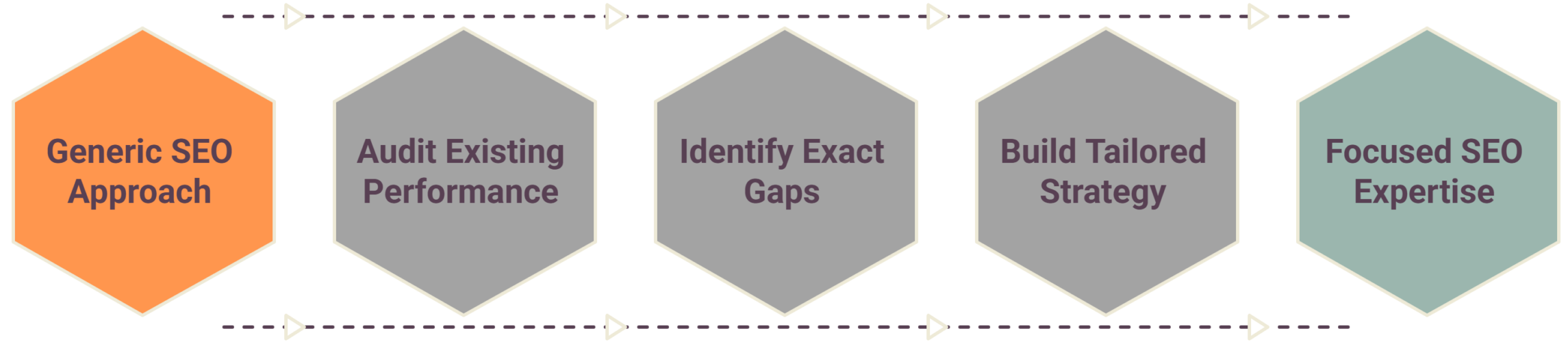
An organic SEO consultantbrings focused expertise to a specific business situation. Rather than applying a generic agency template, a consultant audits existing performance, identifies the exact gaps, and builds a tailored strategy.
A consultant works across the following:
On-page optimisation and content structure
Topical mapping to build subject authority
Technical fixes that currently block AI crawlability
Competitive analysis within AI search results specifically
For smaller businesses without large marketing teams, a consultant offers a direct route to specialist knowledge without the overhead of a full agency retainer.
What to Look for in Organic SEO Agencies
Not every agency updated its approach for AI search. Choosing between organic SEO agencies requires asking direct questions about what their current strategy actually looks like.
Evaluate agencies on:
Demonstrated understanding of AI search and entity optimisation
Case studies showing organic growth from 2024 or later
Clear reporting on AI visibility alongside traditional rankings
Content strategy capabilities, not just link-building volume
Agencies that still pitch primarily on keyword positions without addressing AI search are working from an outdated model. The pitch sounds familiar. The results will not follow.
How Social Media Supports SEO in 2026
Social media does not directly determine Google rankings. But it contributes to the authority and visibility signals that AI search rewards, and those contributions are real.
Building brand awareness that increases branded search volume over time
Driving traffic to website content, which signals engagement and relevance
Generating shares and mentions that contribute to overall domain authority
Supporting content distribution across platforms that Google actively indexes
For small businesses with tight budgets, social activity amplifies the reach of SEO content without requiring large paid media spend.
Choosing the Right Social Media Marketing Packages
When evaluating social media marketing packages, match the package to business goals rather than just posting frequency. Volume without strategy produces noise, not results.
Consider:
Content quality over the number of posts per week
Platform relevance to the actual audience, not just the most popular platforms
Engagement strategy built around conversation, not just broadcast
Reporting tied directly to website traffic and lead outcomes
Packages that focus purely on follower counts without connecting to organic performance miss the SEO opportunity entirely.
How the Best Content Marketing Agencies Drive AI SEO Results
The best content marketing agenciesnow build strategies around AI search visibility from the brief stage. They plan content clusters, optimise for semantic relevance, and track citation performance rather than just page views.
Strong agencies deliver:
Topical authority mapping across an entire niche before writing begins
Long-form content structured specifically for AI comprehension
Regular content audits to remove or update material that no longer performs
Performance data tied to organic visibility and lead outcomes
Content marketing and SEO are the same discipline now. Agencies that still treat them separately deliver fragmented results.
Why a Content Marketing Specialist Matters for Gemini SEO
Acontent marketing specialist ensures every piece of content serves both the reader and the search engine. In AI search, that dual focus is non-negotiable.
Specialists handle:
Content briefs aligned precisely with search intent
Keyword integration that reads naturally within the flow of the text
Topic clusters that build authority across a subject over time
Editorial consistency that strengthens brand credibility month after month
Without specialist oversight, content production drifts toward volume over quality. AI search penalises that drift directly and immediately.
What the Best Content Marketing Companies Offer in 2026
Thebest content marketing companies deliver AI-optimised strategies alongside traditional production. They understand entity optimisation, structured content architecture, and how Google’s model evaluates demonstrated expertise.
Look for companies that:
Conduct thorough topical research before a single word gets written
Build internal linking strategies that distribute authority across the domain
Align content to the full user journey from awareness through to conversion
Track AI citation performance as a primary success metric
How Content Marketing Supports Gemini SEO
Google’s AI model cites sources it considers authoritative and genuinely helpful. Consistent, high-quality content across a topic builds exactly that reputation over time.
Businesses that invest in content marketing create a compounding advantage. Each new piece strengthens topical authority. Each citation in an AI answer increases brand exposure. Each visitor who arrives from an AI citation already carries trust in the source. Over time, this cycle accelerates. The businesses that start earliest benefit most from it.
How to Measure Gemini SEO Success
Traditional metrics still matter. AI search demands broader measurement alongside them.
Track:
Organic traffic volume and month-on-month trend direction
AI citation appearances and featured answer frequency
Engagement metrics, including time on page and return visit rate
Lead generation attributed specifically to organic search
Conversion rates from organic traffic compared to paid
Businesses that measure AI visibility alongside traditional metrics get an accurate picture of actual search performance rather than a partial one.
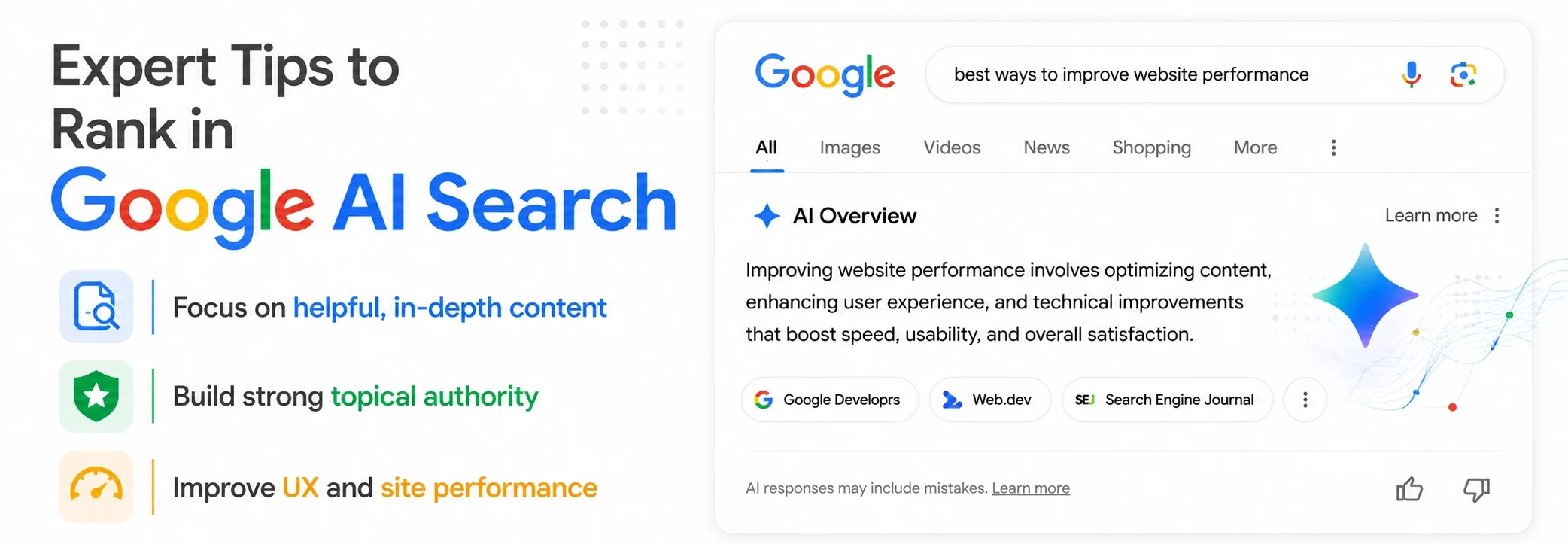
Expert Tips to Rank in Google AI Search
Steps that directly improve AI search performance:
Write content that answers specific questions completely and without filler
Use clear headings and logical structure that AI models can parse easily
Build internal links that connect related content across the domain
Earn backlinks from relevant, authoritative domains with genuine editorial standards
Implement structured data to help AI systems read and categorise content
Publish consistently to signal ongoing expertise to Google’s model
Why Businesses Should Start Gemini SEO Early
Early adoption builds compounding advantages. Businesses that establish topical authority now face less competition for AI citations than those who start a year from now. Authority accumulates. Google’s model learns which sources consistently produce reliable, helpful content. That reputation takes time to build and takes even longer to displace once established.
Waiting for AI search to become more dominant before adapting is the most expensive delay a business can make.
Why Choose Redefining Web for Gemini SEO
Adapting to AI search requires a partner who understands both the technical and content dimensions of what Google now rewards. Redefining Web has built its practice around exactly this shift, helping businesses earn AI citations, build organic authority, and grow visibility in a search environment where quality content and genuine expertise determine who gets seen and who does not.
Ready to grow your organic visibility in AI search?
Redefining Web works with businesses across industries to deliver content strategies, technical SEO, and authority building built specifically for Google’s AI-driven results. Let us show you what that looks like for your business.
It is the practice of optimising content for Google's AI-powered search, which constructs direct answers rather than simply returning a list of links.
It shifts ranking value away from keyword density toward content quality, domain authority, and how accurately a page satisfies user intent.
Yes. Technical SEO, backlinks, and content quality all still matter. AI search builds on these foundations rather than replacing them outright.
For most businesses, yes. AI search evolves quickly, and expert guidance prevents costly mistakes while accelerating results.
Agencies provide strategy, content production, technical optimisation, and ongoing monitoring aligned with AI search requirements.
Directly, no. But social activity builds brand awareness, drives traffic, and contributes to authority signals that AI search rewards.
Early movers build authority faster and face less competition for AI citations. Every month of delay makes the catch-up harder and more expensive.
Voice search integration, personalised AI results, and multimodal search will continue to expand. Businesses that establish authority now sit in the strongest position for every evolution that follows.
Hi, I’m Richa Sharma, a digital marketing professional with 8+ years of experience in SEO and online marketing. I currently work as an SEO Manager at Redefining Web, where I help businesses improve their Google rankings, website traffic, and online visibility. I have experience in SEO, social media marketing, keyword research, Google Analytics, and content optimization. I enjoy creating smart marketing strategies that help brands grow online and reach more customers. I am passionate about learning new digital trends, working with teams, and helping businesses achieve better online results.
Know your website’s SEO Score.
Get a customized SEO Audit report & improve your website statistics.





 Chat on WhatsApp