


Most businesses publish content on a regular schedule, yet the traffic rarely turns into leads. The real problem is not effort. Teams often build content around internal assumptions instead of the actual questions buyers type into a search bar. When topics come from guesswork rather than real search behavior, even a large content library fails to convert. Content marketing SEO services built the right way start with a different question: what are buyers genuinely searching for, and how does content answer that instead of what a team assumes matters?
Get a free content and search intent audit to see how your current pages match what buyers actually search.

 Chat on WhatsApp
Why So Much Content Gets Published Without Ever Matching Real Search Intent
Teams often pick topics because they sound relevant internally, not because data backs them. A blog calendar built from brainstorm sessions tends to reflect what the marketing team finds interesting rather than what a buyer types into Google at 11pm while comparing vendors.
Generic keyword targeting makes this worse. A writer picks a broad term, hits the word count, and publishes without asking what question sits behind that search. The page ranks, sometimes, but the visitor leaves because the content never answers the real intent behind the click.
5 Signs Your Content Isn’t Built Around What Buyers Are Actually Searching
A few patterns show up again and again when content misses buyer intent:
- High traffic with low engagement or conversions
- Content ranking for irrelevant or low intent keywords
- No consistent lead generation despite regular publishing
- Topics chosen from internal brainstorms instead of real search data
- No tracking of what buyers search for before they make contact
Any one of these on its own might not mean much. Seeing three or more together usually points to a strategy built on assumptions rather than research.
What It Actually Means to Build Content Around Real Buyer Search Behavior
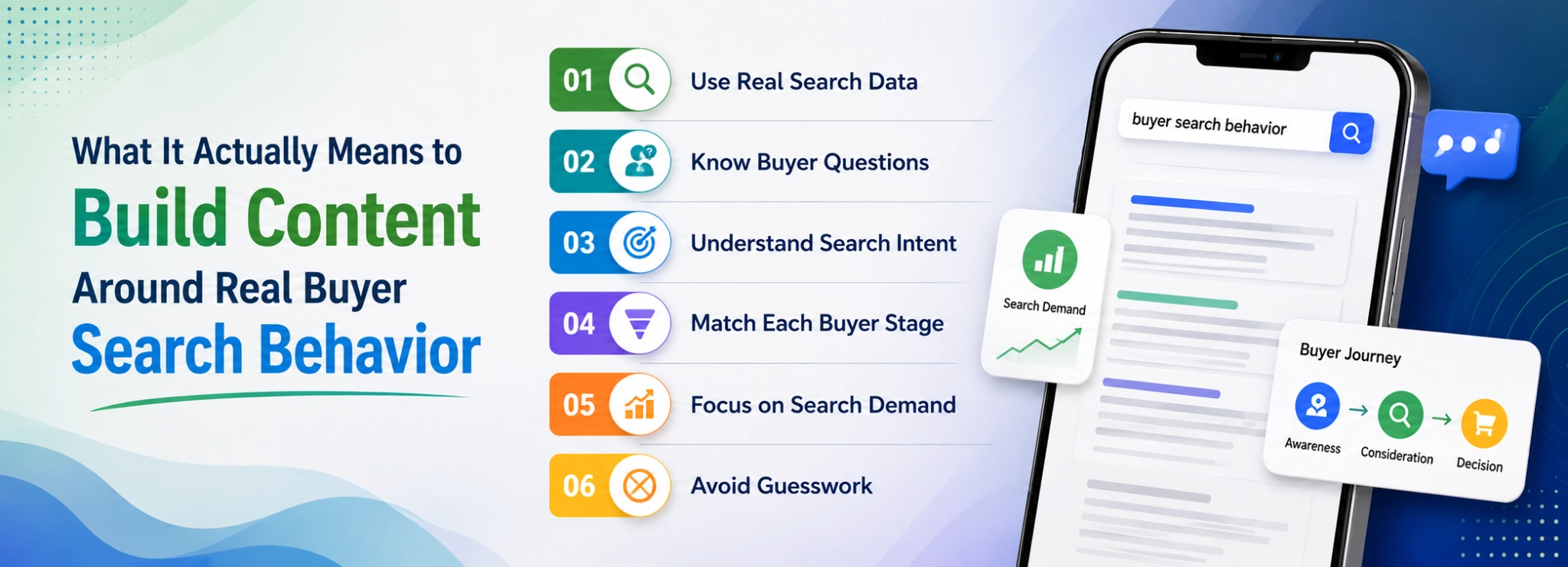
Research has to come before writing, not after. That means pulling actual search data, studying what people type at each stage of their decision, and treating that data as the starting point for every topic choice.
Buyers ask different questions early on than they do right before they buy. A strategy grounded in real behavior maps content to those specific questions instead of forcing one generic piece to cover every stage. This is the foundation that separates content built to rank from content built to convert.
How Content Marketing SEO Services Start With Research, Not Writing
Before a single sentence gets written, the process should include keyword and search intent research so every topic has proof of demand behind it. This step also uncovers gaps between what buyers are searching for and what competitors already offer, which often points to the most valuable topics to target first.
From there, a content roadmap takes shape based on real demand rather than internal preference. This is where content marketing SEO services earn their value, because the roadmap reflects what buyers are actually asking rather than what sounds good in a planning meeting.
Why a Content Marketing Specialist Focuses on Buyer Questions Over Keyword Volume
Search volume alone can mislead a strategy. A term with heavy volume might attract visitors who have no intent to buy, while a lower volume phrase tied to a specific hesitation might bring in exactly the right person. A skilled content marketing specialist knows the difference and builds around intent first.
That means mapping content to specific stages of the buyer journey and writing pieces that answer real hesitations rather than chasing a term just because it ranks well. The goal shifts from visibility for its own sake to visibility that actually moves someone closer to a decision.
What Content Marketing Consulting Adds Before Any Content Gets Created
A strong round of content marketing consulting starts with an honest audit of existing content against real buyer search patterns. This step often reveals pages that get traffic but never convert, alongside gaps where no content exists at all despite clear demand.
From there, consulting identifies which topics deserve investment and which ones waste budget. The strategy that follows ties back to business goals rather than traffic totals alone, which keeps every piece of content accountable to something more meaningful than a pageview count.
How SEO and Content Marketing Services Work Together to Target Real Demand
Technical SEO makes sure buyer-focused content actually gets found in the first place. Without a solid technical foundation, even the best-researched content can sit buried on page three. SEO and content marketing services work best when they support each other instead of operating as separate departments.
Keyword research grounded in genuine search intent feeds directly into ongoing optimization, and both teams review how buyers actually engage with published pages. This creates a feedback loop where technical fixes and content updates reinforce the same goal instead of pulling in different directions.
Assumption-Based Content Strategy vs. Search Intent-Driven Content Strategy
| Factor | Assumption-Based Strategy | Search Intent-Driven Strategy |
| Topic selection | Internal brainstorms and guesswork | Real search data and buyer questions |
| Keyword targeting | Broad terms chosen for volume | Terms matched to specific intent |
| Buyer relevance | Loosely connected to actual needs | Directly tied to buyer hesitations |
| Conversion potential | Low, traffic rarely turns into leads | Higher, content answers real questions |
| Long term traffic quality | Inconsistent and often irrelevant | Steady and increasingly qualified |
How SEO Content Marketing Services Adjust Strategy by Buyer Journey Stage
Early-stage buyers ask broad, research-driven questions as they try to understand a problem before they know what solutions exist. Content at this stage should educate first and sell later, since pushing a pitch too early tends to lose the reader. Good SEO content marketing services recognize this and pace the content accordingly.
Mid-stage content compares options and addresses specific hesitations, while late-stage pieces support the final decision to buy. Each stage needs its own tone and depth, and treating them as one blended audience usually produces content that serves nobody particularly well.
Why a SaaS Content Marketing Agency Needs a Different Approach to Search Intent
SaaS buyers tend to research longer and dig deeper than buyers in most other industries. A SaaS content marketing agency has to account for this extended journey, since a single blog post rarely closes the gap between first visit and signed contract.
Technical buyers also search for specific, detailed answers rather than broad overviews, which means content has to go deeper than surface-level explanations. The best SaaS content supports trial signups and demos directly, guiding a technical audience toward a hands-on experience rather than just building general awareness.
How Content Marketing for Small Businesses Should Prioritize Search Intent on a Limited Budget
A limited budget forces hard choices, and that can actually work in a small business’s favor. Content marketing for small businesses should focus on a smaller set of high-intent topics first rather than spreading thin across dozens of broad subjects.
Avoiding broad, low-conversion content in favor of a handful of targeted pieces tends to produce better results faster. Once specific topics prove demand, the budget can scale toward those areas with real evidence backing the investment instead of a hopeful guess.
6 Ways to Identify What Buyers Are Actually Searching For
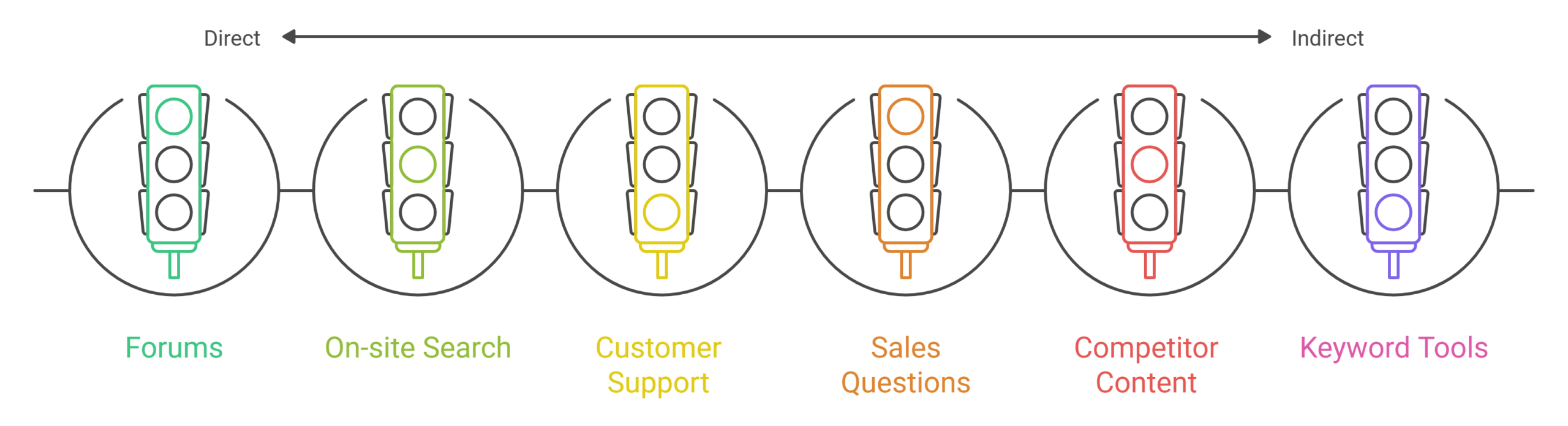
Finding real buyer intent takes more than one source of data. A few reliable methods include:
- Analyzing real search query data instead of assumptions
- Reviewing customer support and sales questions for content ideas
- Studying competitor content that already ranks well
- Using keyword tools to validate search volume and intent
- Monitoring forums and communities where buyers ask questions directly
- Tracking on-site search behavior for topic gaps
None of these methods work perfectly alone, but combined they give a clear picture of what buyers genuinely want to know before they reach out.
What a Content Marketing Manager Oversees to Keep Strategy Aligned With Buyer Search
A content marketing manager keeps the entire operation aligned by maintaining a content calendar built around validated search demand rather than internal deadlines alone. This role also coordinates writers and reviews finished output against the original intent goals set during research.
As search behavior shifts and results come in, the manager adjusts strategy rather than sticking rigidly to a plan set months earlier. This ongoing adjustment keeps content relevant instead of letting it drift away from the questions buyers are actually asking today.
How a Content Creation Marketing Agency Turns Research Into Content That Performs
Research alone does not produce results. A skilled content creation marketing agency translates intent research into clear content briefs that give writers a specific question to answer rather than a vague topic to explore.
Writing that directly answers the buyer’s original question tends to hold attention far longer than content that wanders. Redefining Web has built its own process around this exact discipline, keeping every brief tied to a validated search question so the finished piece never drifts from the intent it was built to satisfy.
What Should Be Included in Content Marketing Packages Built Around Buyer Search
Solid content marketing packages should treat research and intent mapping as a core deliverable, not an afterthought bundled in as a courtesy. Without that foundation, every other part of the package rests on guesswork.
Content creation should tie directly to validated topics uncovered during research, and ongoing performance tracking should follow every published piece. Strategy adjustments based on real results keep the package accountable rather than static, which matters far more than the raw number of articles delivered each month.
Why Content Built Around Buyer Search Outperforms Content Built for Volume Alone
Content built around real search intent brings in higher-quality traffic that is more likely to convert into an actual lead. Visitors who find exactly what they searched for tend to stay longer, read more, and trust the source behind the answer.
This approach also produces stronger engagement, since content that actually answers the question searched holds attention instead of losing the reader halfway through. Over time, this leads to a more efficient use of content budget, because fewer pieces get wasted on topics nobody was searching for in the first place.
How to Know If Your Content Is Actually Matching What Buyers Search
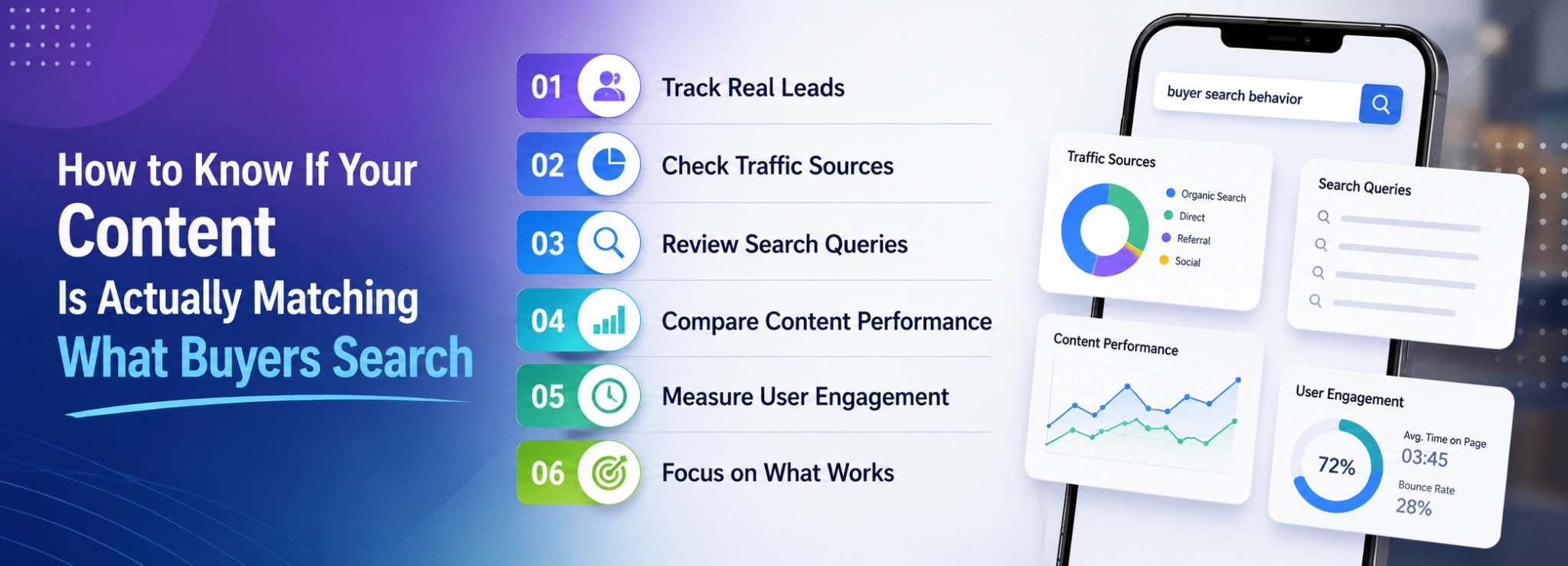
The clearest signal comes from tracking which content pieces drive real leads, not just traffic. A page can rank well and still fail if nobody who reads it ever reaches out.
Reviewing the search queries that actually bring visitors to each page reveals whether the content matches the intent it was built for. Comparing engagement between intent-driven pages and older assumption-based content often shows a stark difference, and that comparison alone can justify a shift in strategy.
5 Questions to Ask Before Hiring for Content Marketing SEO Services
Before signing on with any agency, a few questions separate a research-driven partner from one that will publish content on autopilot:
- How do you research what buyers are actually searching for
- Can you show examples of content built around validated search intent
- How do you measure success beyond traffic
- How do you adjust strategy as search behavior changes
- What is included in your content research process
Clear, specific answers to these questions matter more than a polished pitch deck.
What Realistic Results Look Like When Content Matches Real Buyer Search
Early improvements usually show up in engagement and time on page rather than a sudden spike in leads. Buyers spend more time with content that actually answers their questions, and that shift often appears within the first few weeks.
Leads tied to specific content pieces tend to grow gradually rather than all at once, and traffic quality compounds as more intent-matched content gets published. Patience matters here, since the compounding effect takes longer to build than a quick traffic bump but tends to hold up far better over time.
Closing Thoughts
Content that performs is content built around what buyers are genuinely searching for, not what a team assumes they want to read, and the right content marketing SEO services start with research rather than writing, a difference that shows clearly in the results over time. Redefining web approaches for every content project with that same principle at the center, treating buyer search data as the starting point rather than an afterthought.
Request a free content marketing strategy consultation or a custom quote to start building content around what your buyers actually search.
Frequently Asked Questions About Content Marketing SEO Service


Know your website’s SEO Score.
Get a customized SEO Audit report & improve your website statistics.