
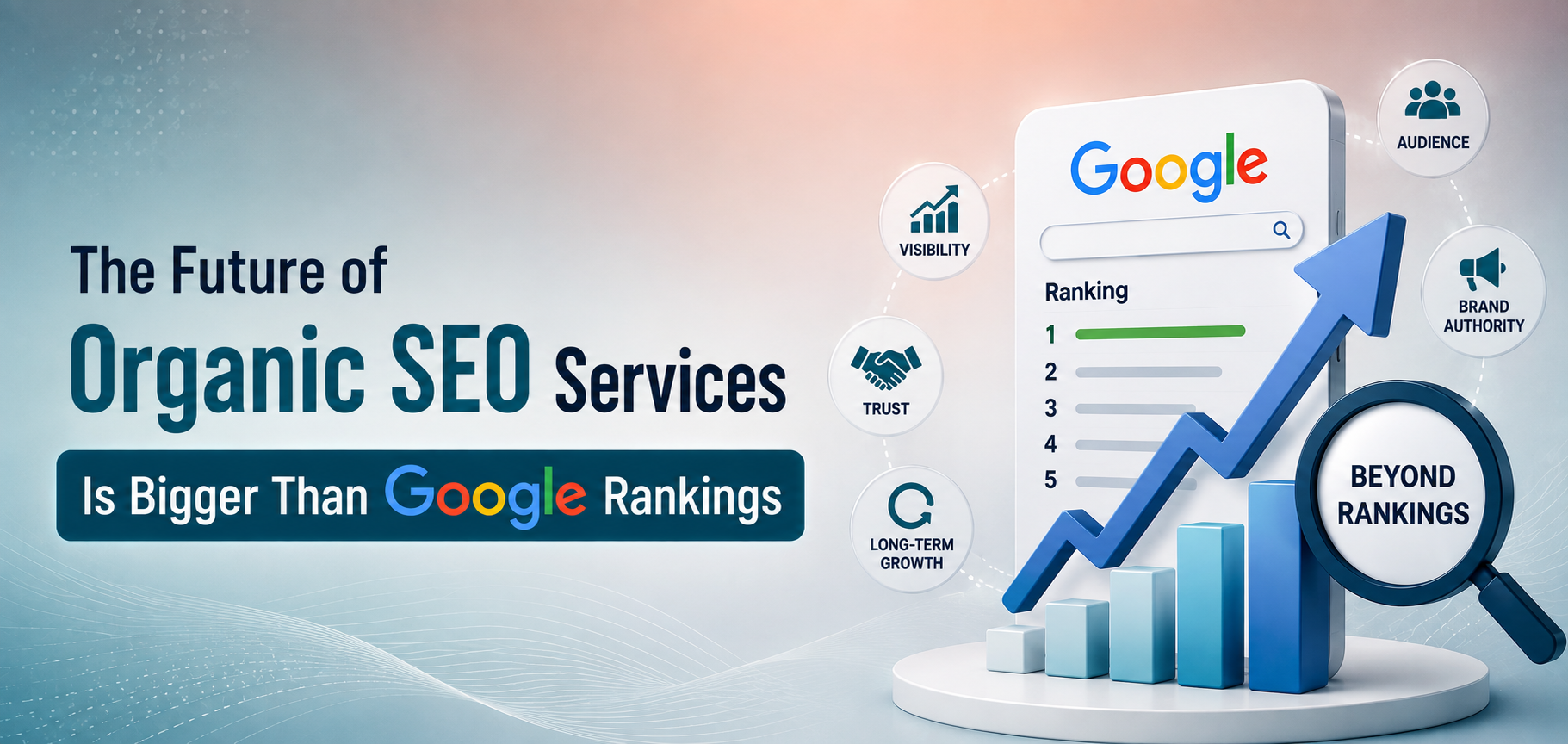
For years, SEO success meant one thing: ranking on page one of Google. That definition no longer captures the full picture. Businesses that still measure success by rankings alone are missing where real visibility and growth now come from. Search has spread across AI platforms, review sites, and social channels, and the future of organic SEO services looks far different from a single blue link on a results page. This article breaks down what that shift actually means for businesses trying to stay visible in 2026 and beyond.
Get a free organic SEO visibility audit.

 Chat on WhatsApp
How the Definition of SEO Success Has Changed
AI-generated search summaries now answer many queries before a user ever clicks a link. Zero-click searches have become common, and a top ranking does not guarantee a visit to your site anymore. Visibility now spans multiple platforms beyond Google’s results page, including AI assistants, review platforms, and social search.
A business can rank well and still lose ground if it ignores these newer surfaces. Search behavior keeps shifting, and strategies built only around rank tracking fall behind fast.
5 Signs Your SEO Strategy Is Still Stuck in a Rankings-Only Mindset
Many businesses hold onto outdated habits without realizing it. Here are five common warning signs:
- Reporting focuses only on keyword position, nothing else
- No tracking exists for AI search visibility or brand mentions
- There is no strategy for platforms beyond Google
- Success gets measured by rank instead of real business outcomes
- Brand visibility across search surfaces receives little to no attention
If more than one of these applies, your strategy likely needs an update.
Why Ranking Number One Doesn’t Guarantee the Traffic or Trust It Used to
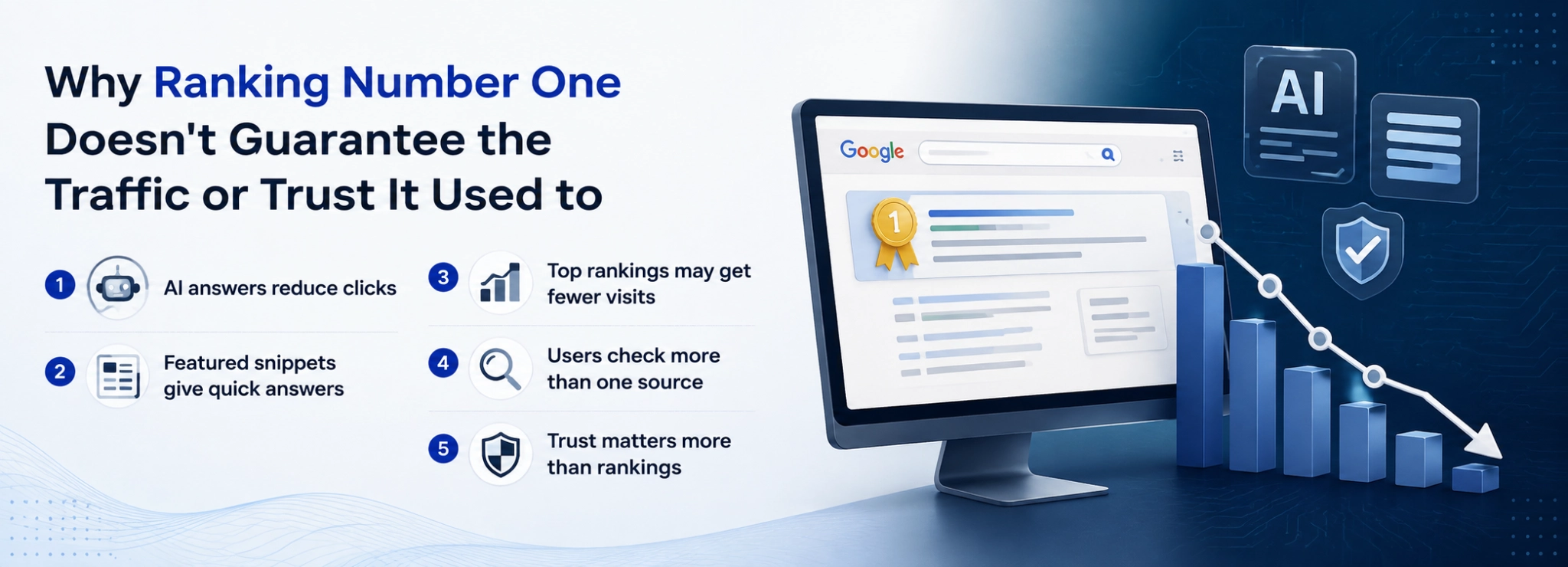
AI Overviews and featured snippets often satisfy a search without requiring a click at all. Users now scan a quick summary and move on, even when your page sits at the top spot. That shift changes what a top ranking actually delivers.
Skepticism toward purely SEO driven content has grown too. People increasingly check multiple sources before they trust a claim or make a decision, so one high-ranking page rarely closes the deal on its own anymore.
What Organic SEO Services Are Expanding to Cover in 2026 and Beyond
Modern organic SEO services now stretch across visibility on AI search platforms alongside traditional Google results. Brand mention tracking and reputation signals matter just as much as keyword targeting did. Content now needs to earn trust and citations, not just chase a ranking position.
This broader scope means businesses need partners who understand more than technical optimization. They need guidance on how brands get discovered, quoted, and trusted across an expanding set of digital spaces.
How an Organic SEO Agency Approaches Visibility Beyond Rankings
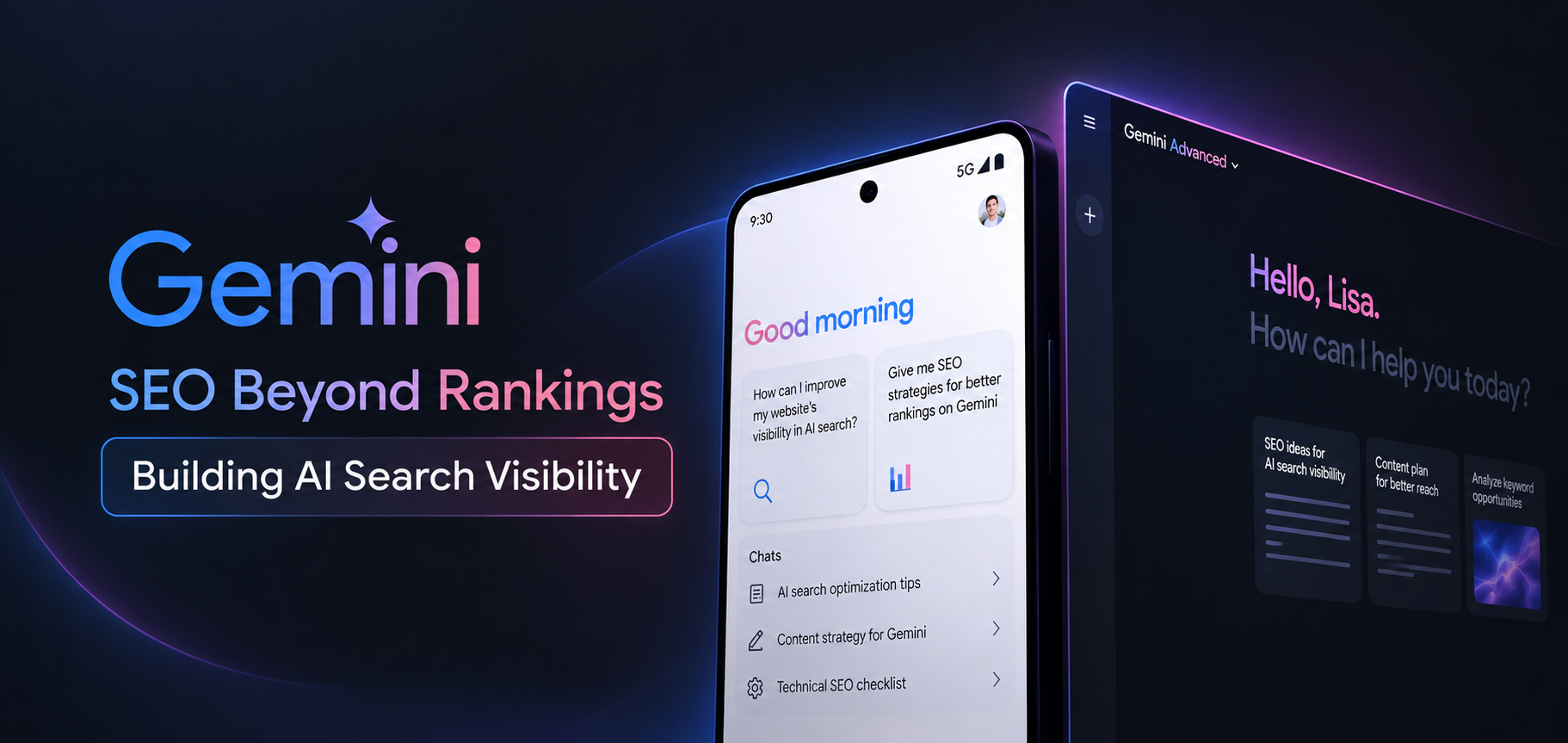
A capable organic SEO agency now monitors presence across ChatGPT, Perplexity, and AI Overviews, not just Google’s organic listings. Building topical authority supports citations and mentions across these tools, which pushes strategy well past the old keyword checklist.
Google becomes one visibility channel among several, not the entire game. Teams at Redefining Web have built this wider view into client strategies, connecting traditional search work with newer AI visibility tracking so brands do not get left behind as search keeps changing. A skilled organic seo agency treats every platform where customers search as part of the same strategy.
Why an Organic SEO Company Now Measures Success Differently
A modern organic SEO company tracks assisted conversions and brand recall, not just rank alone. Reporting now covers visibility across multiple search surfaces instead of a single ranking report. This connects SEO work to real business outcomes like leads and revenue rather than abstract positions.
That shift forces a rethink of what a monthly report should even contain. An organic seo company that still hands clients a plain rank tracker sheet is offering an incomplete picture of what is actually happening.
What Organic SEO Consultants Are Advising Clients to Prioritize Now
Organic SEO consultants are pushing clients to build trust signals through reviews, mentions, and third-party validation. Diversifying content formats supports multiple discovery channels rather than one narrow path. Preparing for continued shifts in how people search has become part of the standard advice, not an afterthought.
Clients who follow this guidance tend to spread their visibility across more channels instead of depending on one ranking report each month.
Rankings Only Strategy vs Full Visibility Strategy
| Factor | Rankings Only Strategy | Full Visibility Strategy |
| Metrics tracked | Keyword position only | Rankings, AI mentions, brand recall |
| Platforms covered | Google search only | Google, AI tools, review sites, social search |
| Content approach | Keyword-focused pages | Trust and citation-focused content |
| Resilience to algorithm changes | Low | Higher, spread across surfaces |
| Long-term business impact | Narrow, rank-dependent | Broader, less dependent on one channel |
Why Trust Signals Are Becoming as Important as Keyword Rankings
AI search tools favor sources with strong credibility signals over pages that simply repeat a keyword. Reviews and reputation now influence both AI and traditional visibility at the same time. Real expertise and clear authorship have become harder to fake or automate around, which raises the bar for thin content.
Businesses that skip this layer often see AI tools skip them too, even when their pages technically rank.
How Organic SEO Specialists Build Authority That Extends Beyond a Single Page
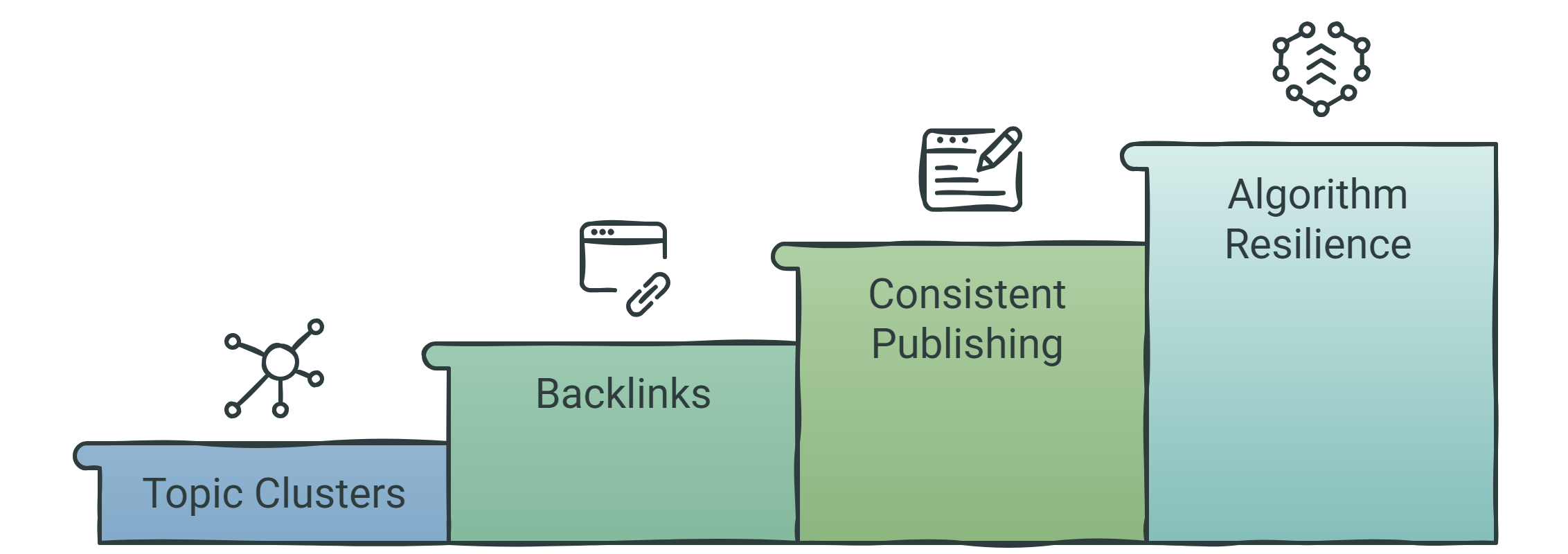
Organic SEO specialists use topic cluster strategies that build depth across a subject rather than betting on one page. Earning mentions and backlinks from credible, relevant sources adds weight that a single optimized page cannot achieve alone. Consistent publishing signals ongoing expertise, not a one-time effort that fades after launch.
This layered approach takes longer to build, but it holds up better against algorithm shifts than a handful of isolated pages ever could.
What Organic SEO Solutions Now Include That They Didn’t a Few Years Ago
Current organic SEO solutions include structured data that supports AI extraction and citation, something few teams considered a priority a few years back. Brand visibility monitoring across AI platforms has become standard rather than optional. Integration with content and reputation strategy now sits alongside technical fixes instead of standing apart from them.
Businesses relying on old-school organic seo solutions built only around meta tags and backlinks are working with tools that no longer match how search actually functions.
6 Elements Shaping the Future of Organic Visibility
- AI search citation and mention tracking
- Structured, answer first content formatting
- Cross-platform brand consistency
- Reputation and review management
- Original data and insights that AI models can reference
- Ongoing adaptation as search behavior continues to shift
Each element reinforces the others, so skipping one weakens the whole approach.
Get a custom organic SEO strategy built around your business.
How Organic SEO Consulting Is Evolving to Guide Businesses Through This Shift
Organic SEO consulting now starts by helping businesses understand where they currently stand across every search surface, not just Google. Identifying gaps beyond traditional ranking reports has become a core part of the process. Building a roadmap that accounts for continued search evolution keeps that plan useful past the next algorithm update.
This kind of guidance requires consultants who track AI search trends closely, since the landscape moves faster than it did even two years ago.
Why Businesses Working With Organic SEO Consultants Are Better Positioned for Change
Early adaptation to AI search beats scrambling to catch up later, and organic SEO consultants push clients toward that early move. Guidance grounded in current data replaces outdated assumptions that no longer match how people search. Ongoing strategy adjustments happen as new search behaviors emerge, rather than once a year during a planning meeting.
Businesses that treat this as a one-time project instead of an ongoing relationship tend to fall behind within a year.
What Happens to Businesses That Wait Too Long to Expand Beyond Rankings Only SEO
Businesses that wait lose visibility on platforms where competitors already show up. Building AI search trust becomes harder after falling behind, since credibility signals take time to accumulate. The disadvantage compounds as the gap between strategies widens month after month.
Catching up later almost always costs more time and money than adapting early would have.
How to Know If Your Business Is Ready to Expand Its SEO Strategy
Watch for these signs that your current approach has not kept pace:
- Your strategy has not changed in over a year
- You have no visibility tracking beyond Google rankings
- Competitors appear in AI search results where you do not
Any one of these points to a strategy that needs a fresh look.
Businesses Adapting Early vs Businesses Waiting to Adapt
| Factor | Adapting Early | Waiting to Adapt |
| Current visibility | Broad, across multiple platforms | Narrow, mostly Google only |
| Adaptability | High, systems already in place | Low, starting from scratch |
| Competitive position | Ahead of slower competitors | Playing catch up |
| Cost of catching up later | Lower, gradual investment | Higher, rushed investment |
| Long-term resilience | Strong | Weak |
What to Look for in Organic SEO Services Built for the Future, Not Just the Present
Look for proven experience with AI search visibility, not only traditional rankings. Transparent reporting across multiple search surfaces should be standard, not a special request. A willingness to explain how strategy is evolving and why separates a forward-thinking partner from one running the same playbook from five years ago.
Businesses that ask these questions upfront avoid wasting months with a partner who cannot keep pace with current search behavior.
Why Hire SEO Expert UK Businesses Trust Should Understand This Bigger Picture
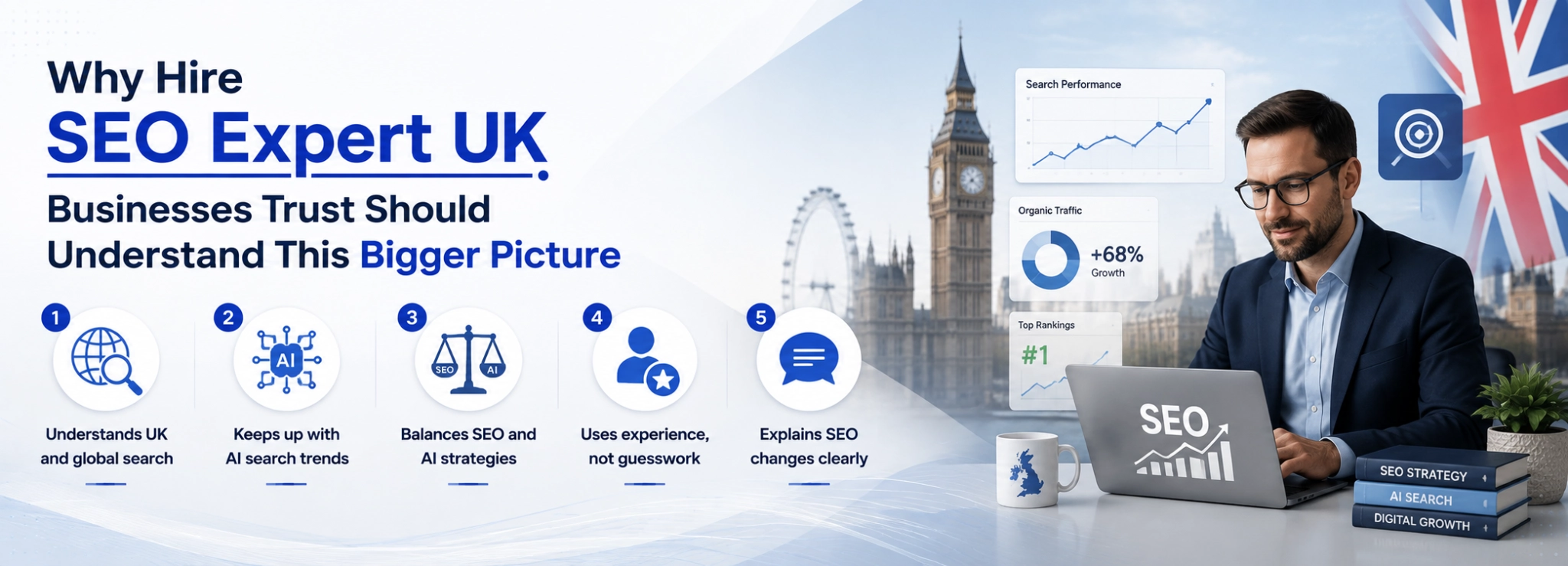
Anyone hire seo expert for companies should understand both local UK search behavior and global AI search trends. Balancing traditional SEO fundamentals with emerging strategy takes real experience, not guesswork. Clear communication about what is changing and what still matters keeps clients informed instead of confused by jargon.
A partner without this range risks optimizing for a version of search that already feels outdated.
5 Questions to Ask an Organic SEO Agency About Their Future-Ready Strategy
Bring these questions to any agency you are considering:
- How do you track visibility beyond Google rankings
- What is your approach to AI search optimization
- How do you measure success beyond keyword position
- How do you help build trust and authority signals
- How often is strategy reviewed as search continues to change
Clear, specific answers signal an agency that has actually adapted, rather than one repeating old talking points.
What Realistic Progress Looks Like When Expanding Beyond Rankings Only SEO
Early improvements often show up as AI search mentions and citations, small but measurable signs the shift is working. Traffic sources diversify gradually over time rather than overnight. Brand visibility compounds as this progress continues, and that compounding effect becomes harder for competitors to catch up to the longer it runs.
Patience matters here, since these gains build steadily rather than arriving all at once.
Closing Thoughts
The future of organic SEO services is about visibility everywhere people search, not just where they used to look. Businesses that adapt now build a lasting advantage over those still measuring success by rankings alone, and firms like Redefining Web have shown what that broader approach looks like in practice for brands ready to move past a single metric.
Ready for a future-ready SEO strategy?
Frequently Asked Questions About Organic SEO Services


Know your website’s SEO Score.
Get a customized SEO Audit report & improve your website statistics.