Skip to main content



“Good SEO isn’t about tricking Google, it’s about creating value for people.” That line has never been truer than in 2025.
Search Engine Optimization (SEO) is still one of the most powerful ways to bring traffic to your website. Even though algorithms and AI tools keep developing, the heart of SEO remains the same, helping users find the most relevant, useful content online.
But what has changed is how we optimize websites.Today, SEO is smarter, faster, and more data-driven thanks to tools powered by artificial intelligence like ChatGPT, SurferSEO, and Google’s AI search updates. In this new era, SEO isn’t just about keywords or backlinks; it’s about combining human creativity with AI-powered insights.
So, let’s explore one of the most asked questions: What’s the difference between On-Page and Off-Page SEO, and how do AI tools help with both?
Curious Why Some Websites Show Up First on Google?

 Chat on WhatsApp
What Is On-Page & Off-Page SEO?
-
On-Page SEO
On-Page SEO means optimizing everything that happens within your website, from your content and keywords to site speed and user experience.
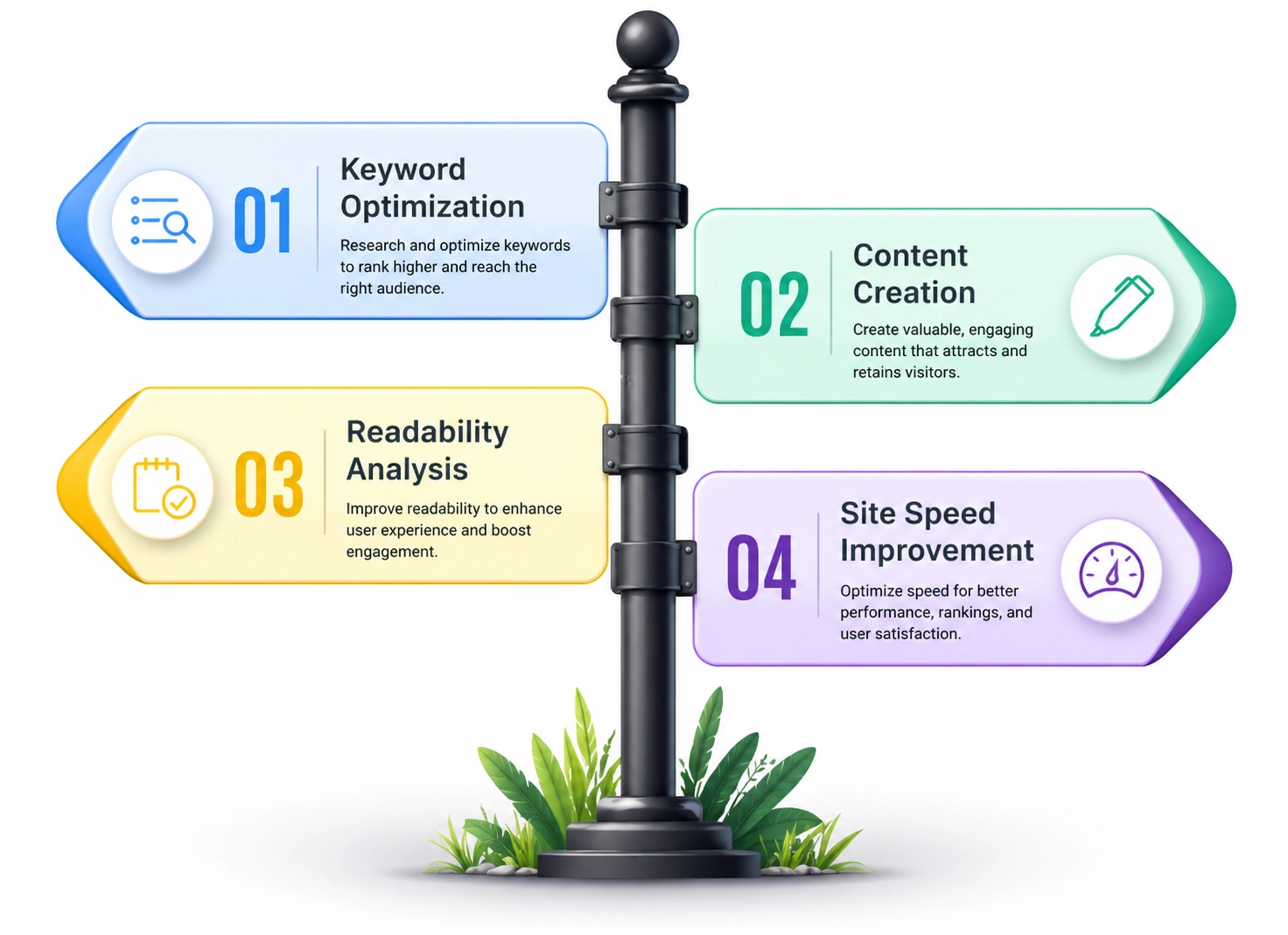
Think of your website as a house. On-Page SEO is how you decorate and organize that house so visitors feel comfortable and want to stay longer. In 2025, On-Page SEO isn’t just about stuffing keywords anymore. AI tools can now:
- Suggest the best-performing keywords for your niche.
- Create content drafts that are well-structured and easy to read.
- Analyze your writing for clarity, tone, and engagement.
For example, tools like ChatGPT, SurferSEO, and Clearscope can scan top-ranking pages and recommend how to improve your own content, from adding FAQs to improving readability. So, if your blog loads fast, reads naturally, and answers user questions better than your competitors, your On-Page SEO is already winning.
- Suggest the best-performing keywords for your niche.
-
Off-Page SEO
While On-Page SEO is about your house, Off-Page SEO is about what people say about your house outside. It’s all about building your website’s reputation on the internet.
This includes:
- Earning quality backlinks from other reputable sites
- Getting brand mentions on social media
- Encouraging reviews, shares, and collaborations
You can now:
- Analyze backlink quality automatically
- Discover influencers in your niche
- Track how your brand is performing across different platforms
Tools like Ahrefs, Semrush, BuzzSumo, and Brand24 use AI to identify potential partnerships, measure engagement, and even alert you when someone mentions your brand online.
In short, Off-Page SEO helps search engines trust your site. The more others talk about your brand positively, the higher your site ranks.
- Earning quality backlinks from other reputable sites
Popular SEO Tools (AI-Driven)
Here are some of the top AI-powered tools changing SEO in 2025:
For On-Page SEO
- ChatGPT – for generating blog ideas, writing outlines, and optimizing content.
- SurferSEO – for real-time keyword optimization based on top-ranking pages.
- Clearscope – for improving readability and keyword density.
- Google Search Console – for tracking performance and indexing issues.
For Off-Page SEO
AI analytics now make it possible to spot keyword gaps, find content opportunities, and monitor results faster than ever before.
- Ahrefs – for backlink analysis and competitor tracking.
- Semrush – for keyword insights, domain authority checks, and link building.
- BuzzSumo – for content research and influencer discovery.
Brand24 – for monitoring brand mentions and social signals.
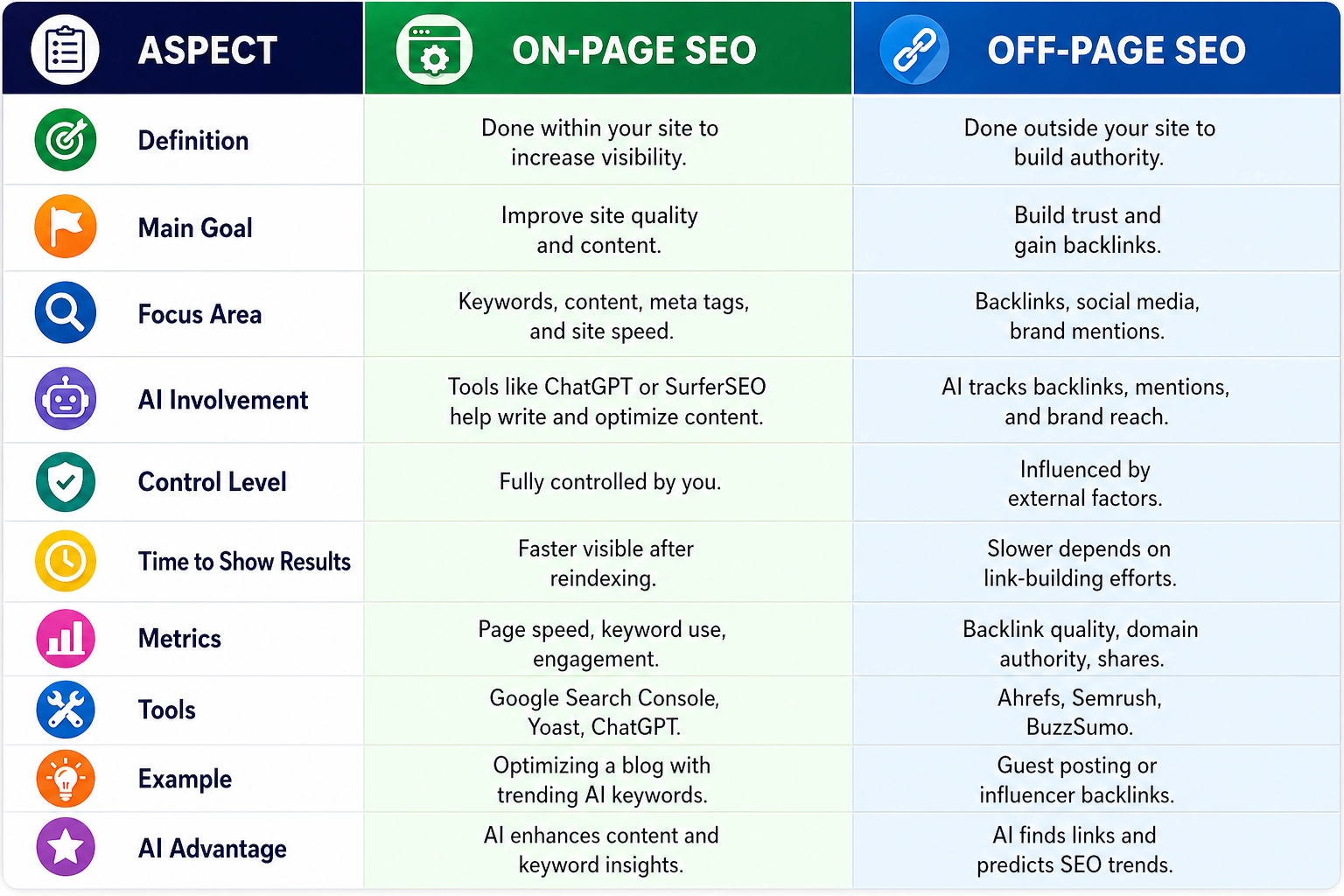
Quick Comparison: On-Page vs Off-Page SEO
What to Do in On-Page SEO
Remember: good On-Page SEO is like maintaining a healthy digital garden, nurture it regularly, and it will grow traffic naturally.
If you want your website to shine from the inside, focus on these:
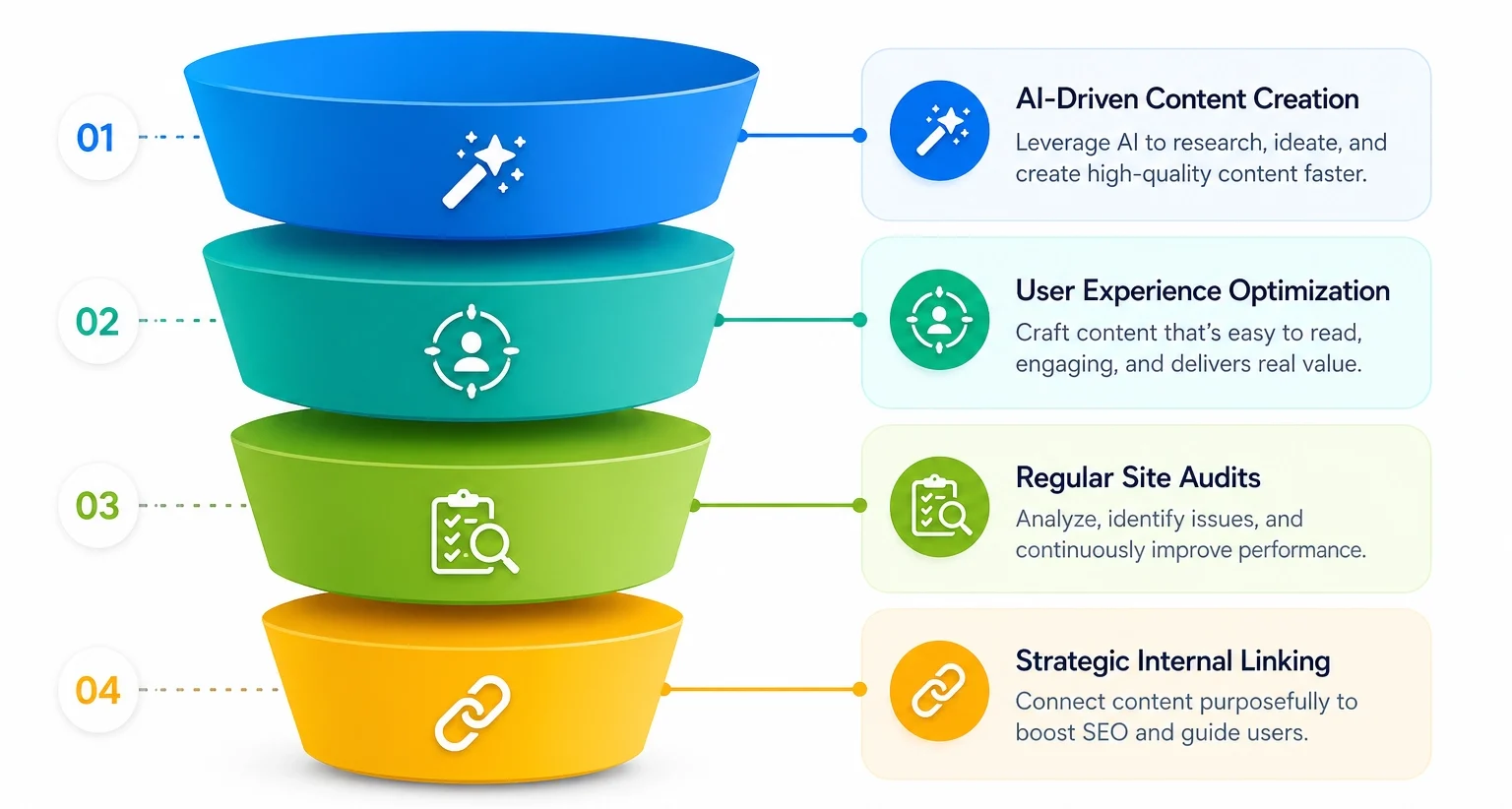
Use AI tools for smarter content
Use ChatGPT or SurferSEO to generate keyword ideas, write blog drafts, and create compelling meta titles and descriptions.Optimize for users, not just search engines
Google’s AI algorithms now prioritize user experience. So make sure your site loads fast, is mobile-friendly, and easy to navigate.Audit your pages regularly
AI-powered site analysis tools can scan your site for broken links, duplicate content, and slow pages, and even suggest quick fixes.Use internal links wisely
Link your own blogs and pages naturally to help users discover more content and keep them engaged longer.
What to Do in Off-Page SEO
When your brand consistently appears on trusted sites, social platforms, and discussions, search engines start viewing it as an authority, and your rankings rise naturally. Off-Page SEO is about trust. You want others to vouch for your site’s credibility. Here’s how to do it effectively:
Build high-quality backlinks
Instead of chasing hundreds of random links, use AI-based tools like Ahrefs or Semrush to find sites that actually matter in your niche.Engage your audience on social media
AI-driven tools can plan your posts, suggest the best posting times, and even analyze which type of content performs best for your followers.Collaborate with influencers
Partner with creators or bloggers in your field. Tools like BuzzSumo can help you find people whose audiences match yours.Monitor your brand reputation
Tools like Brand24 or Google Alerts let you know when people mention your brand so you can respond, engage, or fix issues quickly.
Final Words
Both On-Page and Off-Page SEO are like two sides of the same coin; one builds the foundation of your website, and the other strengthens your reputation on the web.
In 2025, the most successful websites are those that balance both. They use AI tools to save time and uncover insights, but still rely on human creativity to craft messages that connect with real people.
AI tools like ChatGPT make SEO smarter and more data-driven, but your personal touch, your voice, storytelling, and authenticity are what make your website stand out.
So, the next time you work on your SEO strategy, ask yourself:
Is my website optimized for both humans and algorithms?
Because in today’s AI-powered world, the best SEO happens when humans and machines work together.
Now It’s Your Turn to Grow Your Website


Know your website’s SEO Score.
Get a customized SEO Audit report & improve your website statistics.