
Paid ads stop the moment a budget runs dry, but organic traffic keeps growing month after month once it gains momentum. Many businesses still treat SEO and content marketing as two separate tasks instead of one connected growth engine. An organic SEO expert knows that rankings without strong content rarely hold their position, and content without technical SEO rarely gets discovered. This article breaks down what these experts actually do, how content marketing fits into the picture, and how to choose the right partner for long-term growth.
Want a clear picture of where your site stands?

 Chat on WhatsApp
What an Organic SEO Expert Actually Does
Most people assume the job stops at picking keywords and waiting for rankings to climb. The real work covers site structure, page speed, internal linking, and constant tracking of algorithm changes. Rankings show up as a result of that groundwork, not as a starting point.
Paid search buys visibility that disappears the moment spending stops. Organic work builds visibility that stays in place even when budgets shrink. That single difference shapes reporting style, timelines, and what clients should expect from month one.
Why Organic SEO Experts Now Focus on Content Quality First
Search engines moved past simple keyword counts years ago. Stuffing a page with the same phrase ten times used to work, but now it flags a page as low value. Organic SEO experts spend far more time now on topic coverage, search intent, and how thoroughly a page answers a question.
Depth matters more than length. A 600-word page that fully answers a query often outperforms a padded 2000-word page that dances around the topic. Search engines read for substance, and readers reward that substance with longer time on page.
What Organic SEO Services Typically Include
A full scope of organic SEO services usually spans four areas: technical audits, content strategy, link building, and ongoing reporting. Each piece supports the others, so skipping one weakens the whole plan.
Here is what a standard service package tends to cover:
- Technical site audit covering speed, mobile usability, and crawl errors
- Keyword research mapped to buyer intent, not just search volume
- Content calendar built around gaps competitors have not filled
- Link building through outreach, guest posts, and digital PR
- Monthly reporting with clear metrics, not vague summaries
Skipping the reporting step is a common shortcut agencies take, and it leaves clients guessing whether the work is paying off.
Organic SEO Agency vs. Freelance Organic SEO Specialist
Choosing between an organic SEO agency and a freelance organic SEO specialist comes down to scale and budget. A freelancer works well for a single site with a narrow focus and a tighter budget. An agency brings a full team, covering technical, content, and outreach at the same time.
Small local businesses often do fine with a specialist who understands their niche closely. Larger companies with multiple product lines or locations usually need the bandwidth only an agency can provide. Neither option is automatically better; the right choice depends on the size of the task ahead.
How SEO Content Marketing Services Drive Long-Term Rankings
Strong SEO content marketing services aim for two audiences at once: the algorithm and the human reading the page. Content that only pleases search engines feels robotic and loses trust fast. Content that only pleases readers, without any SEO structure, never gets found in the first place.
Thin content still fails to rank in 2026 no matter how well it’s written. Search engines now cross-reference a page against every competing page on the same topic and reward the one with the most complete answer. That single fact should shape every content brief.
Content Marketing Consulting: What Businesses Gain From It
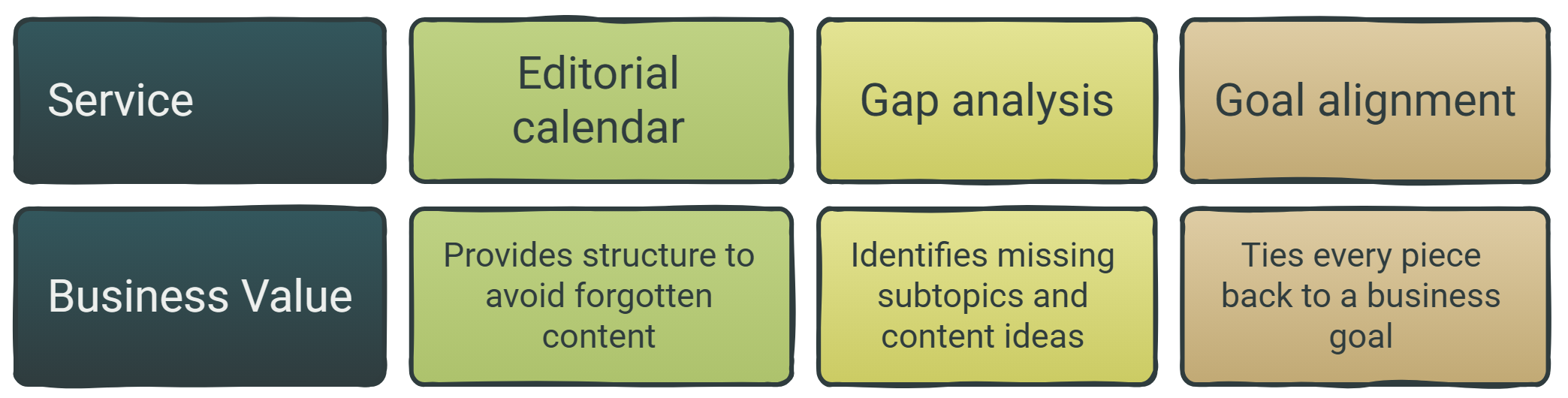
Content marketing consulting goes beyond handing over a stack of blog posts. A consultant builds an editorial calendar, spots content gaps competitors have missed, and ties every piece back to a business goal. Without that structure, content teams end up producing pieces that get published and forgotten.
Gap analysis alone can reshape a content plan. A consultant compares a client’s existing pages against what top-ranking competitors cover, then flags the missing subtopics. That single exercise often uncovers months of content ideas that were sitting in plain sight.
Content Marketing for Startups on a Limited Budget
Content marketing for startups requires discipline because every dollar has to earn its place. The instinct to publish daily burns cash fast without moving the needle. A smarter approach picks a handful of high-impact topics tied directly to what customers already search for.
Realistic timelines matter here too. A startup should expect three to six months before organic content starts contributing meaningful traffic. Rushing the timeline or expecting overnight results usually leads founders to abandon a strategy right before it starts working.
What a Content Marketing Specialist Brings to an SEO Strategy
A skilled content marketing specialist studies the audience before writing a single word. That research shapes tone, format, and which questions get answered first. Guesswork gets replaced with actual reader behavior data.
Collaboration matters just as much as writing skill. The specialist needs to sit close to the technical SEO team so that keyword targets, internal links, and page structure all line up. Content built in isolation from SEO strategy tends to underperform even when the writing itself is strong.
Comparison Table 1: Organic SEO Only vs. SEO Paired With Content Marketing
| Factor | Organic SEO Only | SEO Paired With Content Marketing |
| Traffic Growth Rate | Slow plateaus after initial fixes | Steady and compounding over time |
| Ranking Stability | Vulnerable to algorithm shifts | More resilient due to topical depth |
| Content Lifespan | Short, needs frequent technical fixes | Long, evergreen pages keep earning traffic. |
| Typical ROI Timeline | 4 to 6 months | 6 to 9 months, but with stronger long-term returns |
The table makes the tradeoff clear. Technical SEO alone fixes what’s broken, but content marketing gives search engines a reason to rank the site higher over time.
How to Evaluate Organic SEO Agencies Before Hiring
Case studies separate real organic SEO agencies from ones that talk a good game. Ask for examples from a similar industry or business size, not just impressive numbers from an unrelated niche. A number without context tells very little.
Transparency in reporting is the other test. Agencies that hide behind vague terms like “improved visibility” without hard numbers are avoiding accountability. Watch for agencies that dodge direct questions about past client results; that hesitation usually signals a weak track record.
What Sets the Top Organic SEO Experts Apart From Generalists
The best organic SEO experts bring a track record across multiple industries, not just one lucky client. That range shows they understand principles rather than a single trick that worked once.
Communication style also separates the top tier from the rest. Strong experts explain strategy in plain language and stay involved through the entire campaign, not just during the sales pitch. Generalists tend to disappear after onboarding and resurface only when a contract needs renewal.
SEO Consulting vs. Full-Service Organic SEO Agency
SEO consulting works well when a business already has an in-house team and just needs strategic direction. A full-service organic SEO agency makes more sense when a business wants someone else to execute the entire plan, from writing to technical fixes to outreach.
Cost reflects that difference. Consulting fees are lower since the client’s team does the heavy lifting. Full-service pricing runs higher because it includes execution, tools, and ongoing management across every part of the strategy.
Top Agencies Known for Organic SEO and Content Marketing
Several agencies have built strong reputations in this space, each with a different focus. Redefining Web stands out for combining web design with SEO strategy, helping businesses fix technical issues and content gaps at the same time. WillShall Consulting focuses heavily on consulting-driven SEO roadmaps. Single Grain, NP Digital, and Ignite Visibility round out the list, each known for large-scale campaigns across competitive industries.
| Agency | Overall Rating | Core Service | Best For |
| Redefining Web | 5/5 | SEO, web design, content strategy | Businesses needing site fixes and content together |
| WillShall Consulting | 4.8/5 | SEO consulting and strategy | Teams with in-house execution capacity |
| Single Grain | 4.7/5 | Full-service digital marketing | Larger brands with bigger budgets |
| NP Digital | 4.5/5 | SEO and paid media | Businesses running SEO alongside ads |
| Ignite Visibility | 4.2/5 | Enterprise SEO campaigns | Large companies with multiple markets |
Comparing these options across specialties and pricing tiers helps a business match its size and goals to the right partner instead of picking based on name recognition alone.
How Organic SEO Marketing Supports Brand Authority
Organic SEO marketing builds more than rankings; it builds trust signals that search engines actively reward. Consistent publishing, accurate information, and a clean technical foundation all tell search engines a site deserves visibility.
Brand visibility from organic work extends beyond any single ranking. A business that shows up repeatedly across searches related to its industry earns recognition even from people who never click through. That kind of quiet authority compounds in ways paid ads never manage to replicate.
Common Mistakes Businesses Make With Organic SEO

Inconsistent publishing kills momentum faster than almost anything else. A burst of ten articles followed by three months of silence signals to search engines that the site lost interest, and rankings often reflect that gap.
Other frequent mistakes include:
- Ignoring older pages that once ranked well but now sit outdated
- Chasing high-volume keywords instead of ones tied to buyer intent
- Skipping technical fixes because content feels more exciting to produce
- Treating a single audit as a one-time fix instead of an ongoing process
Older content needs the same attention as new content. A page that ranked well two years ago can lose its position simply because a competitor updated theirs more recently.
How to Measure Success With an Organic SEO Specialist
Rankings alone tell an incomplete story. A skilled organic SEO specialist tracks engagement metrics like time on page, bounce rate, and scroll depth alongside ranking position. A page can rank on page one and still fail if visitors leave within seconds.
Conversion tracking closes the loop. Traffic that never turns into leads or sales isn’t delivering business value no matter how impressive the ranking looks. The right specialist ties every report back to actual business outcomes, not just position numbers.
Comparison Table 2: Organic SEO Service Tiers
| Feature | Basic Package | Mid-Tier Package | Full Content and SEO Package |
| Content Volume | 2 articles per month | 4 articles per month | 8+ articles per month |
| Reporting Frequency | Quarterly | Monthly | Weekly plus monthly summary |
| Strategy Involvement | Limited, mostly execution | Moderate strategic input | Full strategic partnership |
This breakdown helps a business match its budget to the right level of involvement instead of overpaying for a tier it doesn’t need yet.
Questions to Ask Before Hiring an Organic SEO Expert
A short list of direct questions filters out weak agencies fast:
- What methodology do you use for keyword research and content planning?
- How often will we receive reports, and what metrics will they include?
- What happens if results fall short of projections?
- Is the contract flexible, or does it lock in a rigid scope for a full year?
Contract flexibility matters more than most businesses realize going in. A rigid twelve-month contract with no review points leaves little room to adjust if the strategy needs a shift halfway through.
Red Flags That Signal a Weak Organic SEO Agency
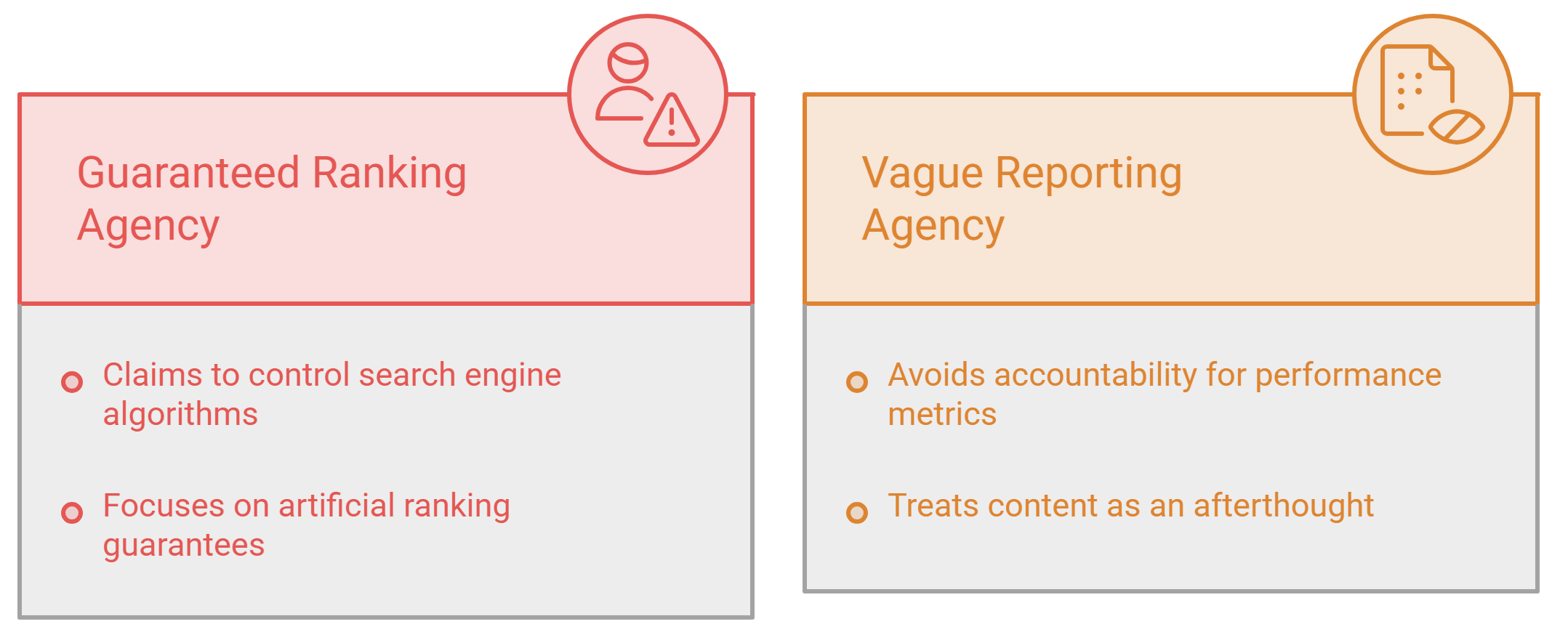
Guaranteed rankings should raise immediate concern. No agency controls search engine algorithms, so any promise of a specific ranking position within a set timeframe is a warning sign, not a selling point.
Vague reporting follows a similar pattern. If monthly reports only mention broad terms without hard numbers, the agency is likely avoiding accountability. A lack of content strategy involvement is the third red flag; an agency that treats content as an afterthought rarely delivers lasting
results.
How Content Marketing and SEO Work Together Long-Term
Traffic from combined content and SEO efforts compounds instead of resetting each month. A blog post published a year ago can still bring in steady visitors today if it was built around a topic with lasting search demand.
Consistency beats short bursts of activity every time. A business that publishes steadily for a year will usually outperform one that published aggressively for two months and then stopped. Search engines reward patterns of reliability over sudden spikes.
Signs Your Current SEO Strategy Needs a Content Marketing Refresh
Stagnant rankings despite technical fixes point to a content problem, not a technical one. If site speed, mobile usability, and crawl errors are all fixed but rankings still sit flat, the content itself likely needs deeper coverage.
Outdated content underperforming against competitors is the other clear sign. A quick comparison against the top three ranking pages for the same keyword usually reveals exactly what’s missing, whether that’s newer data, better structure, or simply more thorough coverage of the topic.
How to Build a Long-Term Organic Growth Plan
A durable growth plan combines three elements: technical SEO, content strategy, and authority building through links and mentions. Leaving out any one piece weakens the other two, since search engines evaluate a site as a whole rather than as separate parts.
Patience matters just as much as strategy. Organic growth builds slowly at first and then accelerates once a site earns enough trust signals. Businesses that stick with a consistent plan for a full year typically see returns that far outpace what the first few months suggested.
Conclusion
Organic SEO and content marketing now work best as one connected strategy rather than two separate budgets. Businesses that keep treating them separately risk slower growth and rankings that never quite stick. Working with an experienced organic SEO expert and a team like Redefining Web gives a business both the technical foundation and the content depth needed to grow steadily over time.
Ready to build a strategy that combines SEO and content the right way?
Frequently Asked Questions About Organic SEO Experts


Know your website’s SEO Score.
Get a customized SEO Audit report & improve your website statistics.