Skip to main content



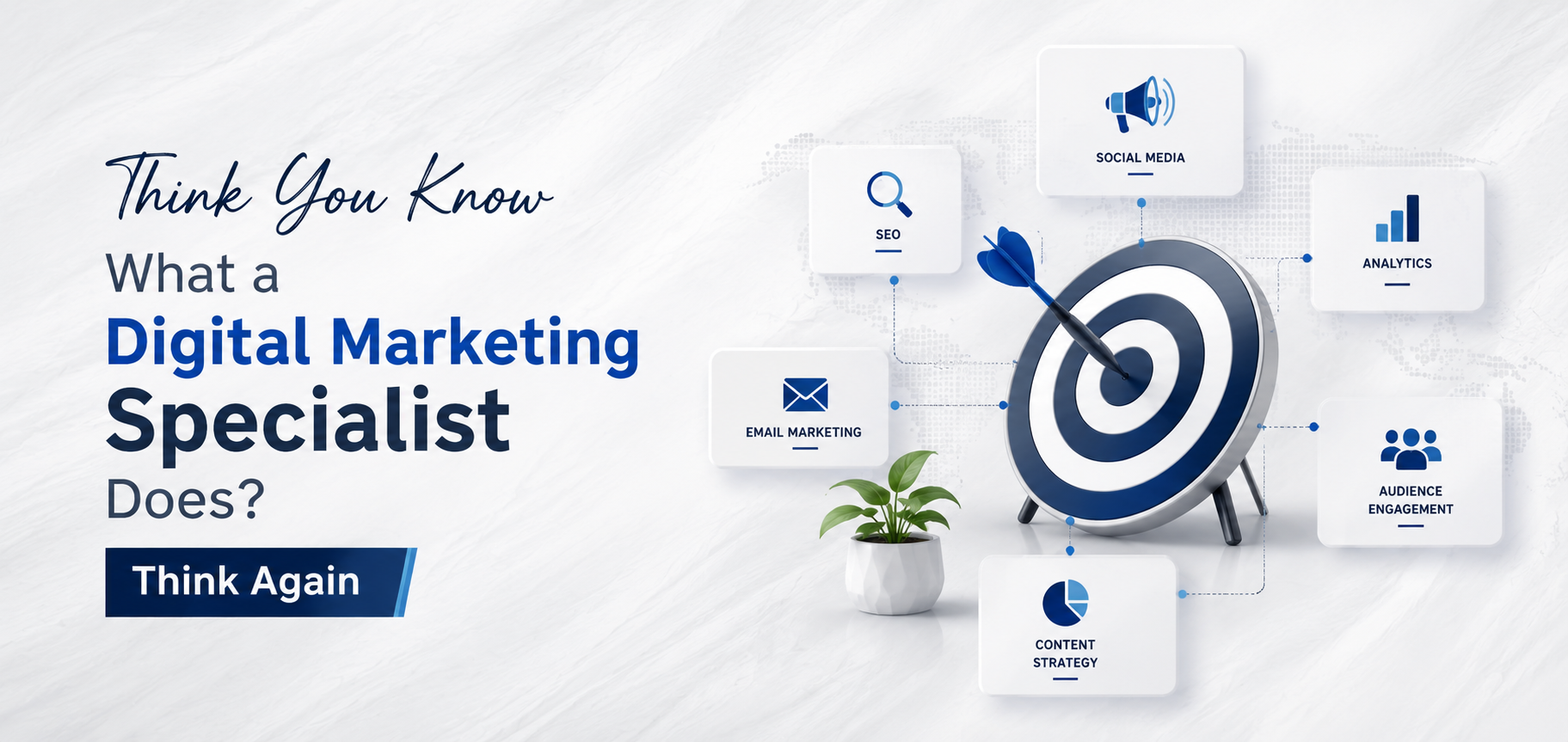
Most business owners picture a digital marketing specialist as someone who posts on Instagram and runs a few Google ads. That picture is outdated, and it costs businesses real opportunities. The role today covers data analysis, cross-channel strategy, content oversight, and constant adaptation to new platforms and algorithms. This article breaks down what the job actually involves in 2026 and why the scope is far bigger than most people assume.
Book a free digital marketing strategy consultation and see where your current approach falls short.

 Chat on WhatsApp
The Common Misconception About What a Digital Marketing Specialist Does
Many people assume this job is just posting content or launching a few ads here and there. That assumption skips over the research, testing, and strategic planning happening behind every campaign.
This misconception sets unrealistic expectations from the start. Business owners expect overnight results and wonder why a specialist spends time on reports instead of just “doing marketing.” The truth is the reporting is part of the marketing.
5 Myths About Digital Marketing Specialists That Need to Disappear
A handful of myths keep businesses from valuing this role properly. Here are the ones worth retiring:
- It’s a single, narrow skill instead of a broad discipline
- Results should show up immediately
- Anyone can do it after a few online tutorials
- The work is only about creativity, not data
- One person can cover every channel equally well
Each of these myths shrinks a complex job into something small and simple. The reality involves juggling platforms, budgets, and business goals at the same time, which takes far more than a weekend course.
Why the Role Has Evolved Far Beyond What It Used to Be
AI tools now handle tasks that used to eat up an entire afternoon, from drafting ad copy to analyzing search trends. That shift freed up time for deeper strategic work, not less work overall.
Multi-channel strategy also grew more complex as customers now interact with brands across search, social, email, and paid ads before making a purchase. The job moved from execution-only tasks toward real decision-making that shapes how a business grows.
What a Digital Marketing Specialist Actually Does on a Daily Basis
A typical day starts with checking performance data across several channels at once, from paid search to email open rates. From there, a digital marketing specialist adjusts strategy based on what the numbers show instead of sticking to a fixed plan regardless of results.
Coordination fills the rest of the day. Content teams, SEO teams, and paid media teams all need direction that points toward the same business goal, and someone has to keep those pieces connected.
How a Digital Marketing Strategist Differs From a Specialist Role
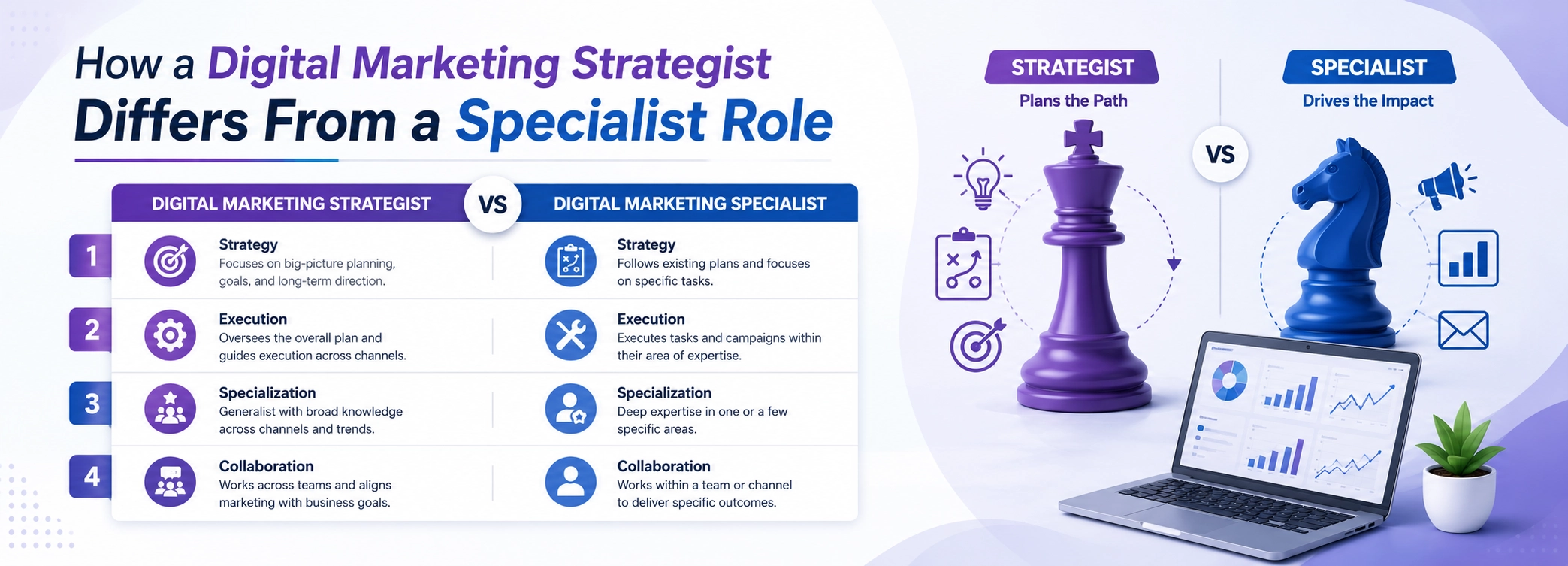
A digital marketing strategist usually focuses on the big picture, setting direction and long-term goals for a brand’s marketing efforts. A specialist tends to execute and optimize specific channels within that broader plan.
The two roles work best together rather than in isolation. The strategist sets where the business needs to go, and the specialist figures out how to get each channel moving in that direction. Many small and mid-sized businesses ask one person to fill both roles, which explains why the job carries so much weight.
Why Data Analysis Has Become Central to the Job
Numbers drive decisions now more than gut instinct does. A specialist interprets analytics to guide next steps rather than just pulling a report and calling it done.
Spotting trends before they become obvious matters just as much as reading past performance. Data also justifies budget shifts, since a business owner wants proof before moving spend from one channel to another. Without that evidence, strategy conversations stall.
What Best Digital Marketing Firms Expect From Specialists They Hire
The best digital marketing firms rarely hire someone who only knows one platform. They look for cross-channel knowledge, since a candidate who understands how paid, organic, and content efforts connect brings far more value than a single-skill specialist.
They also expect the ability to translate raw data into clear business recommendations that a non-marketing executive can understand. Adaptability rounds out the list, since tools and algorithms change often enough that yesterday’s best practice can become today’s mistake.
The Outdated Perception vs. What the Role Actually Involves
| Category | Outdated Perception | What It Actually Involves |
| Daily Responsibilities | Posting content and running ads | Analyzing data, coordinating teams, adjusting strategy |
| Skill Set Required | Basic social media knowledge | Data analysis, SEO, paid media, content strategy |
| Tools Used | A single scheduling app | Analytics platforms, CRM tools, ad managers, SEO software |
| Measure of Success | Likes and follower counts | Conversions, revenue impact, qualified leads |
| Strategic Involvement | Minimal, mostly execution | Deep involvement in business direction and planning |
Why Organic SEO Agency Work Often Falls Under the Same Umbrella
Keyword research and content strategy from an organic SEO agency often overlap directly with broader marketing goals rather than existing as a separate track. Technical SEO coordination, from site speed to structured data, fits into the bigger picture too.
SEO and marketing strategy can no longer stay separated the way they once did. A campaign that ignores search visibility misses a huge share of potential customers, so specialists treat SEO as one piece of a connected strategy instead of an afterthought.
How Organic SEO Companies and Digital Marketing Specialists Work Togethe
Organic SEO companies and specialists align timelines so SEO work supports rather than competes with broader campaigns. Shared reporting on traffic and conversion impact keeps both sides accountable to the same numbers.
Content calendars also get coordinated across both efforts. When an organic SEO company and a specialist plan together, content serves search rankings and campaign messaging at the same time instead of pulling in two directions.
Why Organic SEO Companies Rely on Marketing Specialists for Bigger Picture Strategy
SEO performance means little if it doesn’t connect back to overall business goals, which is where a specialist steps in. Organic SEO companies rely on that connection to make sure rankings translate into leads and revenue, not just traffic numbers on a dashboard.
Specialists also make sure SEO efforts support paid and social strategy rather than working against it. Without that oversight, a business ends up with disconnected, siloed execution across every channel it touches.
What People Don’t Realize About Social Media’s Role in the Job
Social media work involves far more than picking a posting schedule. Strategy sits behind every post, and that strategy needs to coordinate with social media advertising services to reach the right audience at the right moment.
Engagement data also feeds broader campaigns rather than staying isolated on one platform. A comment thread or share pattern can reveal what messaging resonates, and that insight often shapes decisions well beyond the social channel itself.
How a Social Media Marketing Agency Relationship Fits Into a Specialist’s Work

Specialists often manage or oversee the relationship with a social media marketing agency rather than handling every post themselves. Translating that agency’s reporting into business-level insights becomes part of the job.
Alignment matters here too. A specialist makes sure the social strategy from that outside partner fits the same direction as email, paid, and SEO efforts, rather than running as its own separate lane with separate goals.
6 Responsibilities Most People Don’t Know Fall Under This Role
The job stretches into areas most outsiders never consider:
- Competitor research and market analysis
- Budget allocation across multiple channels
- Coordinating with designers, writers, and developers
- Testing and optimizing landing pages
- Managing marketing automation and email workflows
- Staying current with algorithm and platform changes
These tasks rarely show up in a job posting, yet they fill a large share of the actual workweek. A specialist who skips them tends to fall behind fast.
Why SEO Content Writing Services Are Often Part of the Specialist’s Coordination
SEO content writing services rarely operate on their own island. A specialist oversees content calendars tied to both SEO goals and campaign timing, making sure nothing gets published without a clear purpose behind it.
Content needs to support search visibility and brand messaging at once. That means reviewing writer output not just for grammar but for strategic fit, checking that each piece actually moves the business toward its goals.
How Website Content Writing Services Support Broader Marketing Goals
Website content writing services shape landing pages built around specific campaigns rather than generic, one-size-fits-all copy. A page built for a paid campaign needs messaging that matches the ad that sent the visitor there.
Consistency matters across the whole site and every marketing channel. When messaging shifts from an ad click to the final page, visitors notice, and that mismatch often costs a sale. Coordinated content writing services close that gap.
Why PPC Services Company Coordination Is a Bigger Part of the Job Than People Assume
Working with a PPC services company involves more than approving ad spend. Paid campaigns need alignment with organic strategy instead of running as a separate effort with its own disconnected goals.
Budget and performance tracking span every paid channel a business uses, and targeting adjustments come from broader business goals rather than isolated platform data alone. A specialist keeps that coordination running smoothly behind the scenes.
How Paid and Organic Strategy Get Coordinated Behind the Scenes
Paid and organic efforts can end up competing for the same keywords or audience if nobody manages the overlap. Specialists watch for that overlap and adjust before budget gets wasted on redundant targeting.
Paid data often informs organic content decisions too. If an ad performs well with a certain message, that insight shapes future blog posts or landing pages. The goal stays a unified strategy instead of disconnected channel reports that never talk to each other. Teams like the one at Redefining Web have built entire workflows around this kind of cross-channel coordination, treating paid and organic as one connected system rather than two separate departments.
Why Healthcare Digital Marketing Requires an Even More Specialized Skill Set

Healthcare digital marketing brings compliance and privacy considerations that most other industries never touch. A specialist working in this space needs to understand what can and cannot appear in an ad or a landing page.
Trust-focused content matters more here too, since patients search for sensitive topics with real concerns behind the query. Understanding patient search behavior and intent shapes everything from keyword choice to page structure.
How Industry-Specific Knowledge Changes What the Role Looks Like
Healthcare, legal, and finance all demand deeper regulatory awareness than most other industries. A single wrong claim in an ad can create real legal exposure, so specialists in these fields double-check messaging carefully.
Ecommerce shifts the focus toward conversion and product marketing instead. Service-based businesses need a more local and relationship-driven strategy, since customers in that space often choose based on trust and proximity rather than price alone. The version of healthcare digital marketing a dental practice needs looks nothing like what an e-commerce brand requires.
What Businesses Should Actually Look for When Hiring for This Role
A proven ability to work across multiple channels matters more than expertise in just one. Businesses should ask for examples of data-driven decision-making rather than settling for a portfolio full of creative work alone.
Understanding how the role fits into broader business goals separates a strong hire from a weak one. The best digital marketing firms train their people to think this way from day one, connecting every channel back to revenue rather than vanity metrics.
5 Questions to Ask a Digital Marketing Specialist Before Hiring Them
Before signing a contract, ask these questions directly:
- Which channels do you have hands-on experience managing?
- How do you use data to guide strategy decisions?
- How do you coordinate with SEO, content, and paid media efforts?
- Can you show results tied to real business outcomes?
- How do you stay current as platforms and algorithms change?
The answers reveal whether a candidate thinks strategically or just executes tasks without a bigger plan behind them.
What Changes When Businesses Finally Understand the Full Scope of This Role
Expectations shift once a business grasps the real scope of the job. Timelines become more realistic, and strategic input gets valued alongside execution instead of being treated as an afterthought.
Collaboration improves too. A business that understands what this role actually involves tends to communicate goals more clearly, which leads to better results for everyone involved.
Closing Thoughts
The digital marketing specialist role covers far more ground than posting content or launching a few ads, stretching across data analysis, SEO, paid media, and content strategy all at once. Businesses that understand this full scope make smarter hiring decisions and see stronger results from the partnerships they build. Agencies like Redefining Web have shaped their entire approach around this broader definition of the role, treating strategy and execution as one connected effort rather than separate jobs.
Request a free digital marketing strategy consultation or custom quote and see what a fully coordinated approach looks like for your business.
Frequently Asked Questions About Digital Marketing Specialist


Know your website’s SEO Score.
Get a customized SEO Audit report & improve your website statistics.