Skip to main content



Most e-commerce store owners build great products, set up a clean website, and then wait for sales that never arrive. The store looks good. The products are solid. But Google keeps sending customers to competitors instead.
That gap between effort and results usually comes down to search visibility. An SEO expert closes that gap. They audit your store, find what holds it back from ranking, and fix it with a plan built specifically for e-commerce.
Google search rankings decide who gets the sale. A store on page one gets clicks. A store on page two gets skipped. Most shoppers never even scroll that far. The difference between position one and position ten on the same page represents a dramatic difference in monthly revenue.
Shoppers search before they buy. They type a product name into Google, scan the results, compare two or three options, and then purchase. If your store does not show up during that search; you never enter the conversation. Your competitor takes that customer, every single time.
Better rankings produce more qualified traffic. More qualified traffic produces more sales. That cycle, once built, runs consistently without the constant spend that paid ads demand.
Want More Customers to Find Your Products?

 Chat on WhatsApp
What Is Search Ranking and Why Is It Important for E-commerce?
Search ranking is the position your page holds in Google results when a buyer types in a relevant search term. First position captures the most clicks by a wide margin. Tenth position on the same page captures almost none.
Google evaluates hundreds of factors before deciding where each page ranks. Content relevance, website authority, page speed, mobile performance, and how users behave after they click all feed into that decision. E-commerce stores face a harder challenge than most because they compete against large retailers with dedicated SEO teams and substantial budgets.
The numbers are direct. 75% of users never scroll past page one. That means three-quarters of your potential buyers never see your store if you sit beyond that threshold. Page-one visibility is not a nice-to-have. It is the entry requirement for meaningful e-commerce growth.
How Customers Search for Products Online
Buyers research before they spend money. They check prices, read product descriptions, look at reviews, and compare alternatives. That entire process runs through search engines. Your store must appear at multiple points along that research path, not only at the final purchase moment.
Mobile shopping has changed the game entirely. People browse products on their phones while waiting for coffee, sitting on public transport, or standing in a physical store to compare prices. A website that loads slowly or displays poorly on a small screen loses those customers before they see a single product.
Search intent separates a window shopper from a ready buyer. Someone who types ‘order waterproof walking boots size 8 men’s’ wants to complete a purchase right now. Someone who types “best waterproof boots for winter walks” still needs convincing. A strong SEO strategy targets both queries and delivers content that serves each type of searcher at the right moment in their decision process.
What Is Ecommerce SEO in Simple Terms
E-commerce SEO is the process of optimising your online store, so search engines consistently rank your product and category pages above your competitors. It covers the words on your pages, the structure of your website, the speed at which it loads, and the technical signals that tell Google your store deserves top placement.
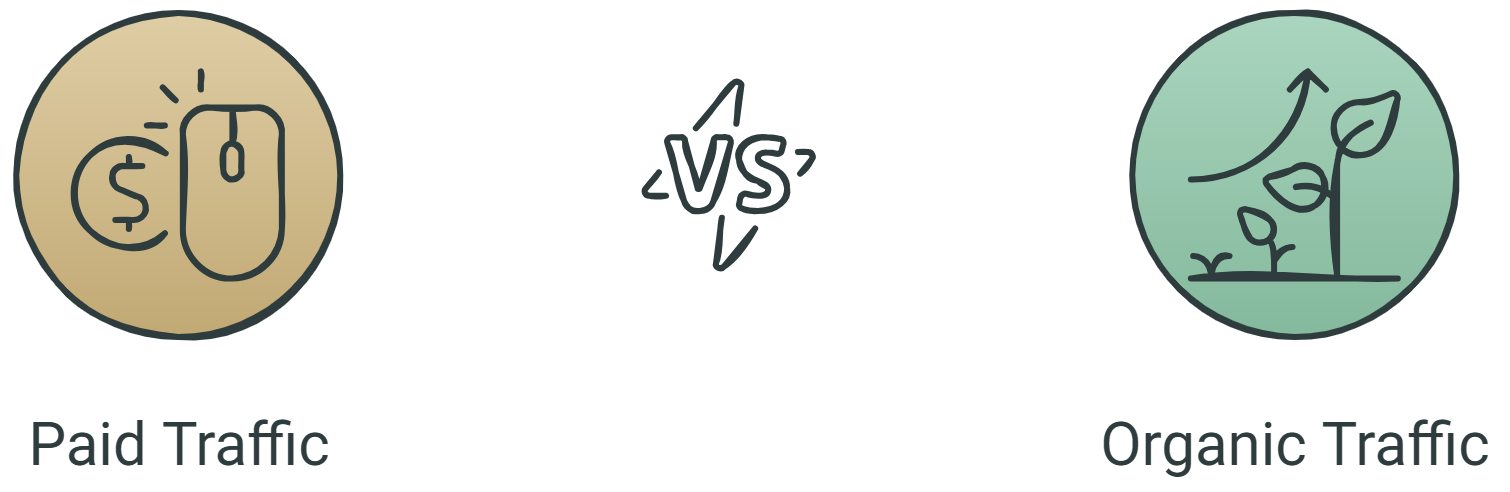
Organic traffic comes through unpaid search results. Paid traffic comes through ads. The difference that matters most is what happens when you stop spending. Paid ads disappear the moment the budget runs out. Organic rankings stay in place and continue to deliver visitors without additional cost. For store owners who want growth that does not evaporate when ad budgets shrink, organic search wins.
SEO also builds over time. Work done in month one continues generating traffic in month seven. Paid advertising cannot replicate that compounding effect.
Why Most Ecommerce Websites Struggle to Rank
The majority of online stores never reach page one. The products may be excellent. The branding may look professional. But underneath the surface, the website has structural problems that search engines penalise consistently.
- High competition means even technically sound stores must outwork established brands that have spent years building authority in their categories.
- Poor website structure prevents search engines from discovering the full range of products a store offers, leaving entire sections of inventory unindexed.
- Weak product descriptions copy manufacturer text directly, which Google treats as duplicate content and deprioritises across the board
- Technical SEO issues, such as broken internal links, missing metadata, and slow server response times, quietly drag rankings down month after month
None of these problems resolves on its own. Without consistent attention, each one compounds the others and makes recovery slower and harder.
What Does an SEO Expert Do for an E-commerce Business
A qualified SEO professional works across every layer that determines how well a store ranks.
- Keyword research and competitor analysis to map out exactly what target customers type into Google before they buy, then build a strategy around those specific terms
- On-page optimisation to rewrite product titles, descriptions, and meta tags so they match real buyer search behaviour rather than generic marketing language
- Technical SEO work that resolves crawl errors, accelerates page load times, consolidates duplicate pages, and ensures Google can access and index every product
- Performance monitoring and reporting to track ranking movements, measure traffic growth, and adjust strategy based on real data rather than assumptions
Each of these areas requires specific expertise. Tackling them without that expertise produces slow movement and mistakes that take months to correct.
How an SEO Expert Helps Customers Find Your Products
A skilled SEO expert focuses on one outcome: your products appear in front of buyers at the precise moment those buyers search for them.
Category pages hold more ranking potential than most store owners realise. A well-optimised category page for “men’s trail running shoes” can attract thousands of monthly visitors who then browse through to specific products. Most stores optimise individual product pages and leave category pages almost entirely bare, which wastes an enormous traffic opportunity.
Qualified traffic beats raw traffic every time. A visitor who lands on your store after searching for a specific product with clear purchase intent converts at a far higher rate than someone who stumbles across the store through a vague query. The goal is not the largest possible audience. The goal is the right audience.
Ready to Outrank Your Competitors?
Product Keyword Research: The Foundation of Ecommerce SEO
Keyword research sits at the start of every effective e-commerce SEO campaign. Without a clear picture of what your customers actually type into Google, every other optimisation effort aims at the wrong target.
- High-intent keywords carry words like “buy”, “order”, “cheap”, “best”, or specific product names, model numbers, and sizes. These phrases signal that the searcher has already decided to purchase and wants to find the right place to do it. Traffic from high-intent keywords converts at the highest rates of any search traffic.
- Long-tail product keywords get underestimated constantly. A phrase like “waterproof trail boots wide fit women’s size 7” has far lower search volume than “boots”, but the person searching it knows exactly what they want and will buy quickly. Conversion rates from long-tail searches consistently beat conversion rates from broad terms.
- Competitor keyword analysis reveals which search terms already send traffic to rival stores. Understanding what works for competitors helps build a smarter strategy and surfaces the gaps they have left wide open.
On-Page SEO Fixes That Improve Product Rankings
Every product page on your store represents a direct opportunity to rank for a relevant buyer search. Most e-commerce stores leave the majority of those opportunities untouched.
- Optimised product titles that pair the primary keyword with specific descriptive detail matching how real buyers search, not how manufacturers label their products
- Original product descriptions written to answer buyer questions and address purchase hesitations, rather than copied spec sheets that add no value and trigger duplicate content penalties
- Meta titles and descriptions crafted to accurately represent the page and give searchers a compelling reason to click through from the results page
- Product image optimisation with descriptive file names and accurate alt text that help images surface in Google Image Search and provide an additional source of qualified traffic
These fixes create the foundation. Without them in place, even the strongest off-page SEO work underdelivers.
How Category Page SEO Can Increase Sales
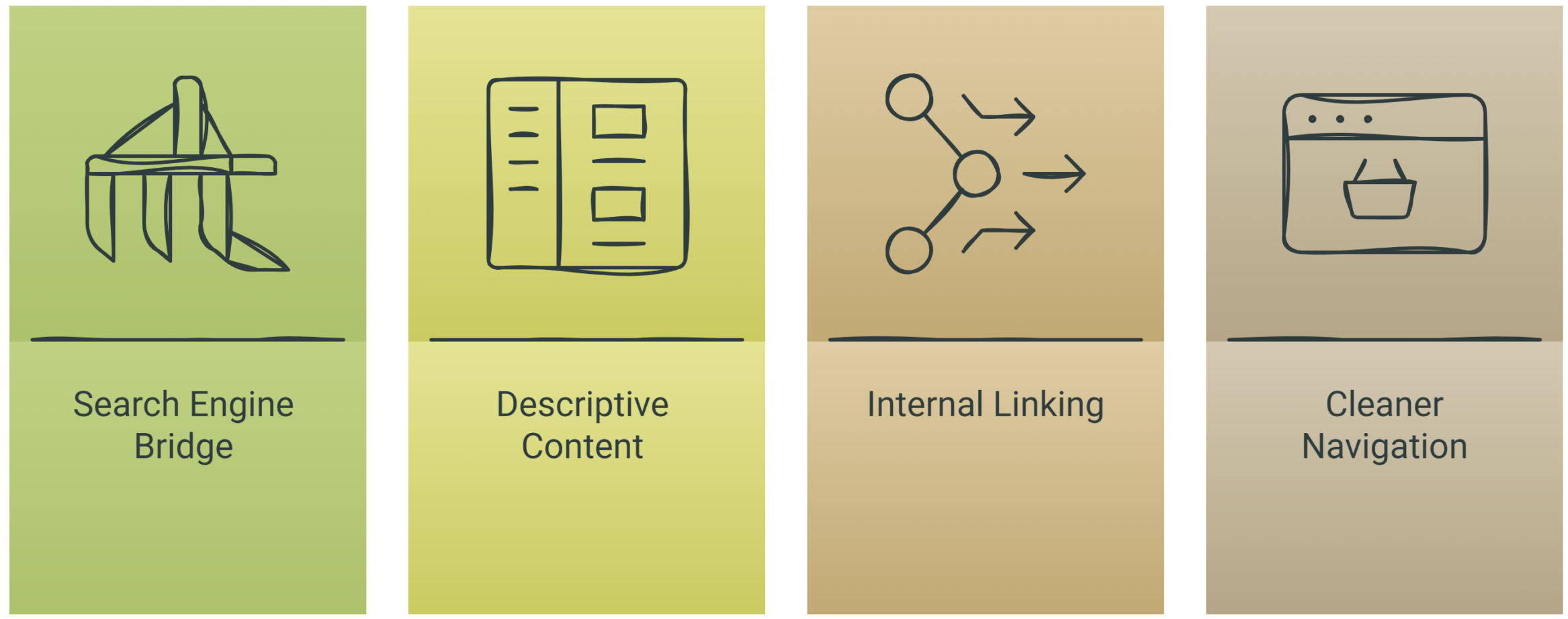
Category pages act as the main bridge between search engines and your product range. A shopper searching for a type of product rather than a specific item lands on a category page first. That first impression determines whether they stay or leave immediately.
Strong category page optimisation means adding descriptive content that explains what the category contains, why your products stand out, and what buyers should consider before choosing. That content gives Google the context it needs to rank the page with confidence.
Internal linking from category pages to individual product pages distributes ranking authority across the store. It also guides visitors deeper into the product range, which increases the chance they find something worth buying.
Cleaner navigation reduces friction. Customers who locate what they want without confusion stay on the site longer, view more products, and complete purchases at higher rates. Every unnecessary click you remove from the path to checkout increases the conversion rate.
Technical SEO Improvements That Boost Ecommerce Performance
Technical SEO underpins every other ranking factor. A store with strong content and good keywords still underperforms if the technical foundation has cracks.
| Technical Factor | Why It Matters |
| Mobile-friendly design | Most buyers browse on phones, not desktops |
| Fast page load times | Slow pages lose visitors before the content even appears |
| HTTPS security | Google actively favours secure sites in search rankings |
| Clean crawlability | Search engines must access every page to rank it |
Resolving these technical factors lets search engines find, process, and rank every product and category page on the store. A technically clean site also delivers a better experience for real visitors, which cuts bounce rates and lifts conversion rates at the same time.
Why Website Speed Impacts Rankings and Conversions
Page speed hits rankings and revenue at the same time. A slow website pushes visitors away before the page finishes loading. Those visitors leave, rarely return, and that lost traffic becomes a lost sale with no recovery.
Google uses page speed as a direct ranking signal across both mobile and desktop searches. Faster websites rank higher, all other factors held equal. Slow websites get pushed down even when their content is strong.
The commercial effect goes beyond rankings. Faster pages reduce cart abandonment. They increase checkout completion. They make the entire shopping experience feel smooth rather than frustrating. The investment in speed optimisation pays returns across multiple business metrics at once.
The Role of Content Marketing in Ecommerce SEO
Content marketing extends your store’s search reach far beyond product and category pages.
- Buying guides help customers make confident purchase decisions and position your store as a trusted authority in the category rather than just another retailer
- Product comparison articles attract buyers who are still evaluating their options and need help narrowing down the choice before they commit
- Educational blog content captures organic traffic from informational searches that occur earlier in the buyer journey, long before the customer has decided what to buy
This content builds topical authority across the entire subject area your store operates in. It generates internal links that strengthen core product and category pages. Over time, it contributes meaningfully to overall traffic growth and supports the rankings of your most commercially important pages.
SEO Agency vs PPC Expert: Which Delivers Better Ecommerce ROI
| Factor | SEO Agency | PPC Expert |
| Traffic Type | Organic | Paid |
| Cost Model | Long-term investment | Continuous spend |
| Results Timeline | Builds over months | Immediate |
| ROI | Higher over time | Strong short-term |
| Best For | Sustained growth | Launches and promotions |
An SEO agency builds search visibility that compounds month after month without proportional increases in spend. A PPC expert delivers fast traffic for new product launches, seasonal promotions, or competitive markets where organic rankings need time to develop. The two approaches complement each other directly. Many successful e-commerce businesses run both simultaneously, using paid ads to generate immediate revenue while SEO builds the long-term organic foundation underneath.
How a Social Media Expert Supports Ecommerce SEO
A social media expert does not control search rankings directly, but their work creates conditions that make SEO perform better over time.
Social platforms send targeted traffic to product and category pages. When visitors click through from Instagram, Pinterest, or Facebook and spend time engaging with your content, those behaviour signals tell search engines your site delivers genuine value. Brand awareness built through consistent social presence increases branded search volume, which strengthens overall search authority.
Content shared through social channels reaches audiences who then link to it, share it further, and reference it. Those external links build domain authority. Stronger domain authority helps every page on your store rank higher. The social work and the SEO work reinforce each other.
Common E-Commerce SEO Mistakes That Hurt Rankings
- Copying product descriptions directly from manufacturers, which Google identifies as duplicate content and actively deprioritises
- Building a site architecture that buries product pages five or six clicks deep, making them difficult for search engines to discover
- Leaving meta titles and descriptions blank or identical across hundreds of product pages, giving Google nothing useful to work with
- Uploading large, uncompressed product images that slow page load times and push mobile performance scores into penalty territory
- Ignoring mobile optimisation entirely, although most shoppers browse and buy on phones
Each mistake costs rankings individually. Together, they make competing on page one almost impossible.
Case Study: How an SEO Agency Helped an Online Store Grow
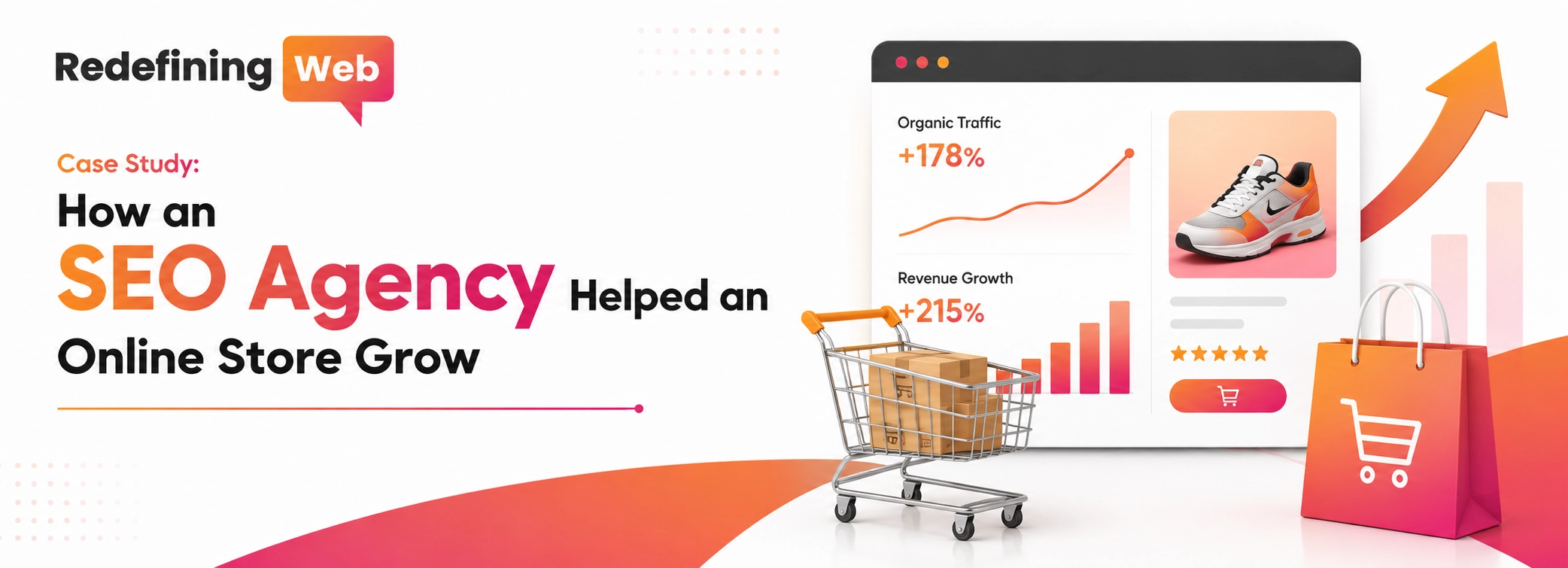
Most store owners know something is wrong with their search visibility. Traffic stays flat, product pages sit buried on page three, and competitors keep taking the sales. This is exactly the situation one online store faced before working with a professional SEO agency.
-
The Challenge
The store had solid products and a functional website. But the numbers told a different story.
- Low organic traffic with almost no growth month over month
- Weak rankings across core product and category keywords
- Poor online visibility that left the store effectively invisible to buyers searching for their products
The business was spending money on ads to compensate for the lack of organic traffic. That approach kept costs high and margins thin. Something had to change.
-
The SEO Strategy
Rather than making surface-level fixes, the agency ran a full diagnostic before touching a single page.
- Technical SEO audit to uncover crawl errors, duplicate content issues, slow load times, and indexing gaps that prevented Google from ranking the store properly
- Product page optimisation to rewrite titles, descriptions, and meta tags around high-intent buyer keywords rather than generic manufacturer language
- Content marketing campaign to build buying guides and category-level content that captured organic traffic from buyers earlier in the research phase
- Internal linking improvements to distribute ranking authority across the entire store and help search engines discover every product page efficiently
Each step was built on the previous one. The technical fixes created a clean foundation. The on-page work gave Google clear signals about what each page offered. The content expanded the store’s reach into new keyword territory. The internal linking tied everything together.
-
Results After 3 Months
The results came faster than the store owner expected.
- 58% increase in organic traffic within the first three months of implementation
- 42% improvement in keyword rankings across core product and category terms
- Higher conversion rates as better-matched traffic landed on more relevant, better-optimised product pages
- Increased e-commerce revenue driven directly by organic search rather than paid ad spend
Three months is not a long time. But when the technical foundation is broken, and the on-page basics are missing, fixing them produces visible results quickly. The store went from invisible to competitive in the searches that mattered most to their buyers.
Why E-Commerce SEO Delivers Long-Term ROI
Paid advertising stops when the budget stops. SEO does not follow that pattern.
Rankings built through consistent optimisation stay in place and continue delivering traffic and sales without requiring the same level of ongoing spend. Customer acquisition costs fall as organic traffic grows. Each month, more customers arrive at a lower cost per acquisition. Over twelve to twenty-four months, that compounds into a major financial advantage over competitors who depend entirely on paid channels.
Brand authority grows alongside rankings. A store that appears consistently at the top of relevant search results builds trust with potential customers before they click. That trust shortens the decision cycle and increases the likelihood of a first purchase.
Why E-Commerce Brands Trust Redefining Web for SEO Growth
Growing e-commerce brands need SEO partners who understand both the technical demands and the commercial objectives of online retail.
Redefining Web builds customised e-commerce SEO strategies around traffic, rankings, and measurable revenue growth rather than surface-level metrics. Their work spans technical SEO, content development, and transparent performance reporting. They design scalable solutions for online stores that want consistent long-term growth, not short-term ranking spikes that fade within a few months.
Conclusion
Search engine optimisation remains one of the most effective and cost-efficient growth channels available to e-commerce businesses at every stage. An experienced SEO expert identifies the specific barriers holding your store back, fixes them systematically across technical, on-page, and content areas, and builds a strategy that delivers consistent organic traffic and higher revenue month after month.
The right SEO strategy puts your products in front of buyers who already search for exactly what you sell and turns Google into the most reliable and profitable customer acquisition channel your business has.
Ready to Grow Your Ecommerce Business?
Frequently Asked Questions About SEO Expert

Know your website’s SEO Score.
Get a customized SEO Audit report & improve your website statistics.